
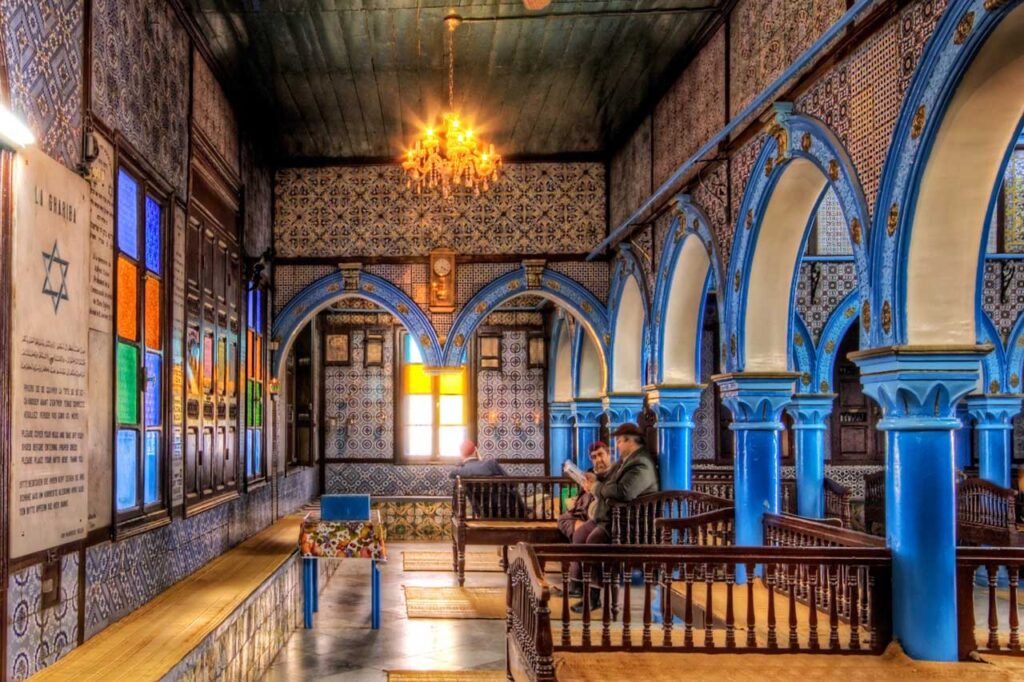
One of the most famous and oldest Jewish pilgrimage sites is El Ghriba, a historic synagogue on the North African island of Djerba in Tunisia.
Located in Er Riadh village, southwest of Houmt Souk, it is regarded as the spiritual center of Djerba’s Jewish community.
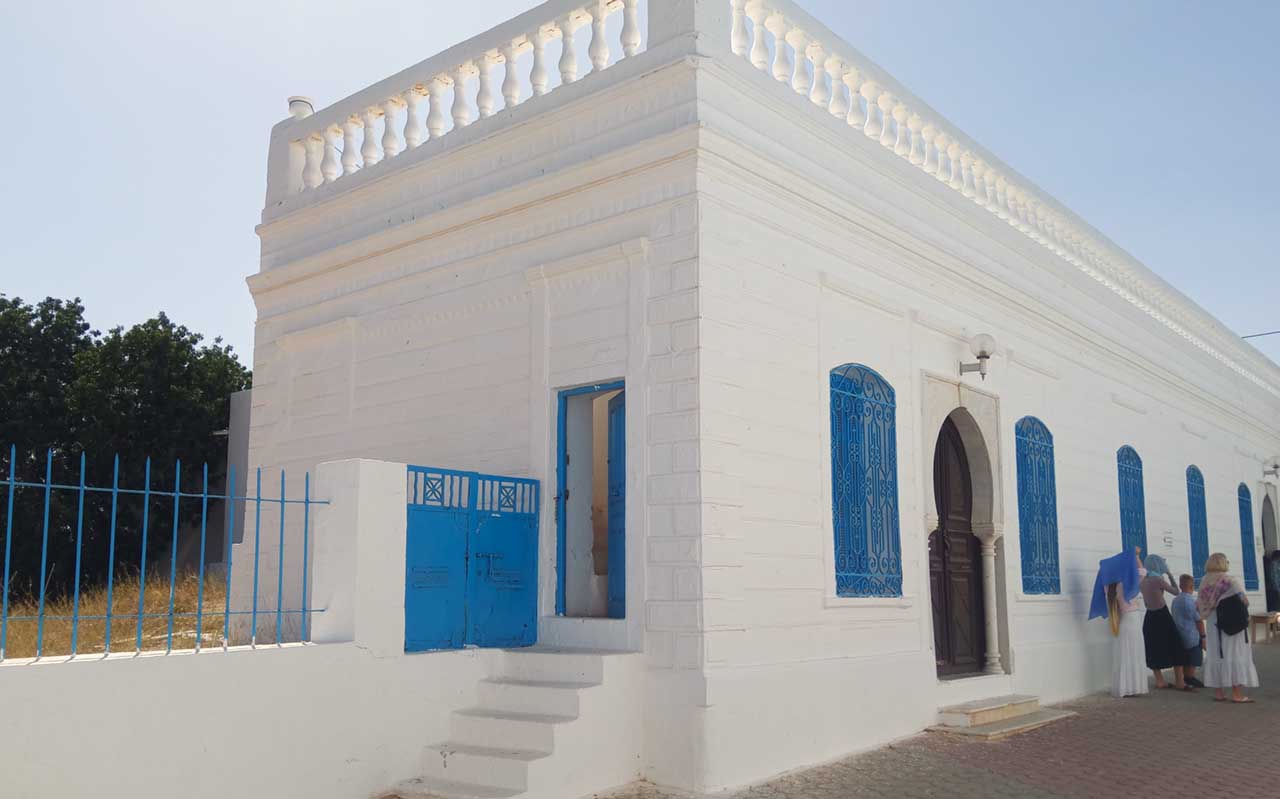
Renowned for its beautifully detailed blue-and-white ceramic tilework, whitewashed walls, and classic blue arches, El Ghriba has historically attracted thousands of visitors during the spring pilgrimage for the Jewish holiday of Lag BaOmer.
El Ghriba is traditionally linked to 586 BC. However, the structure is mainly dated to the late 19th century and underwent further major restorations in the 1920s.
Last updated: August 2026
What is El Ghriba Synagogue?
The synagogue is the oldest in Africa and an ancient Jewish holy site. El Ghriba hosts the Hilula pilgrimage in spring during the Lag BaOmer festival.
The synagogue is located in the ancient Jewish village of Hara Seghira, now known as Er Riadh, southwest of Houmt El Souk, the main town of Djerba island.
What to See in
Djerba
El Ghriba is believed to be the oldest synagogue in the world, on the oldest Jewish religious site still in use.
Despite its traditional date of 586 BC, the synagogue has undergone major restoration work from the 19th century through to the 1930s.
How old is El Ghriba? History, tradition, and what we actually know
The synagogue is said to have been founded by high priests after they fled the destruction of the First Temple in Jerusalem. The high priests are believed to have incorporated a door fragment and a stone, which they salvaged from the First Temple.
Another local legend is that of “ghriba,” a solitary pious and mysterious woman who lived alone in a hut on the island. When the hut caught fire, she was untouched by the flames. Local villagers then regarded the site as sacred, and selected it as the home of the El Ghriba Synagogue.
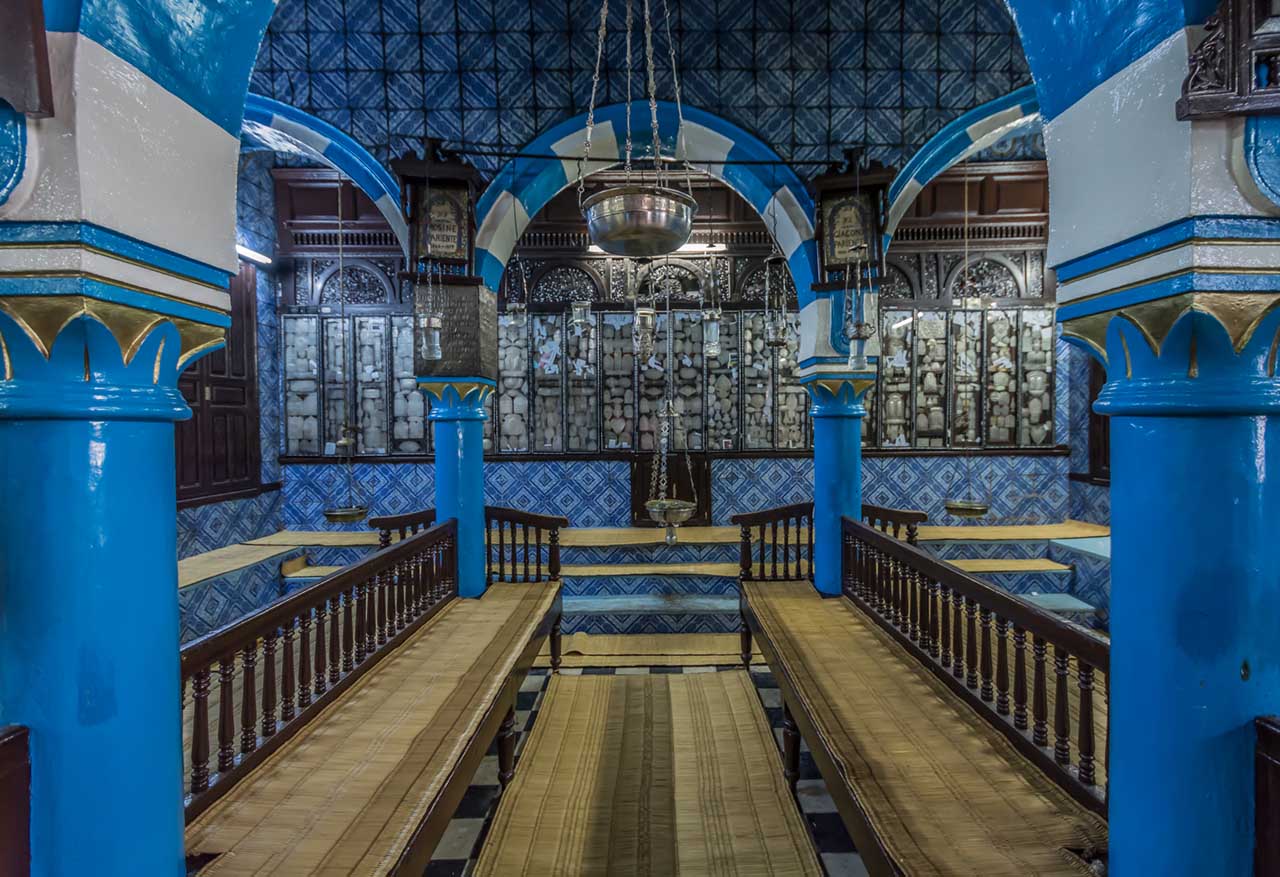
Research by the Center for Jewish Art indicates that the synagogue was reconstructed between 1840 and 1850. Major restoration work, or a complete rebuilding project, took place in the 1920s.
Djerba’s Jewish community
The Jewish community of Djerba numbers 1,100 to 1,200 and is one of the last remaining Jewish communities in the Arab world.
They continue practicing orthodox traditions, with their faith centered on the ancient El Ghriba Synagogue.
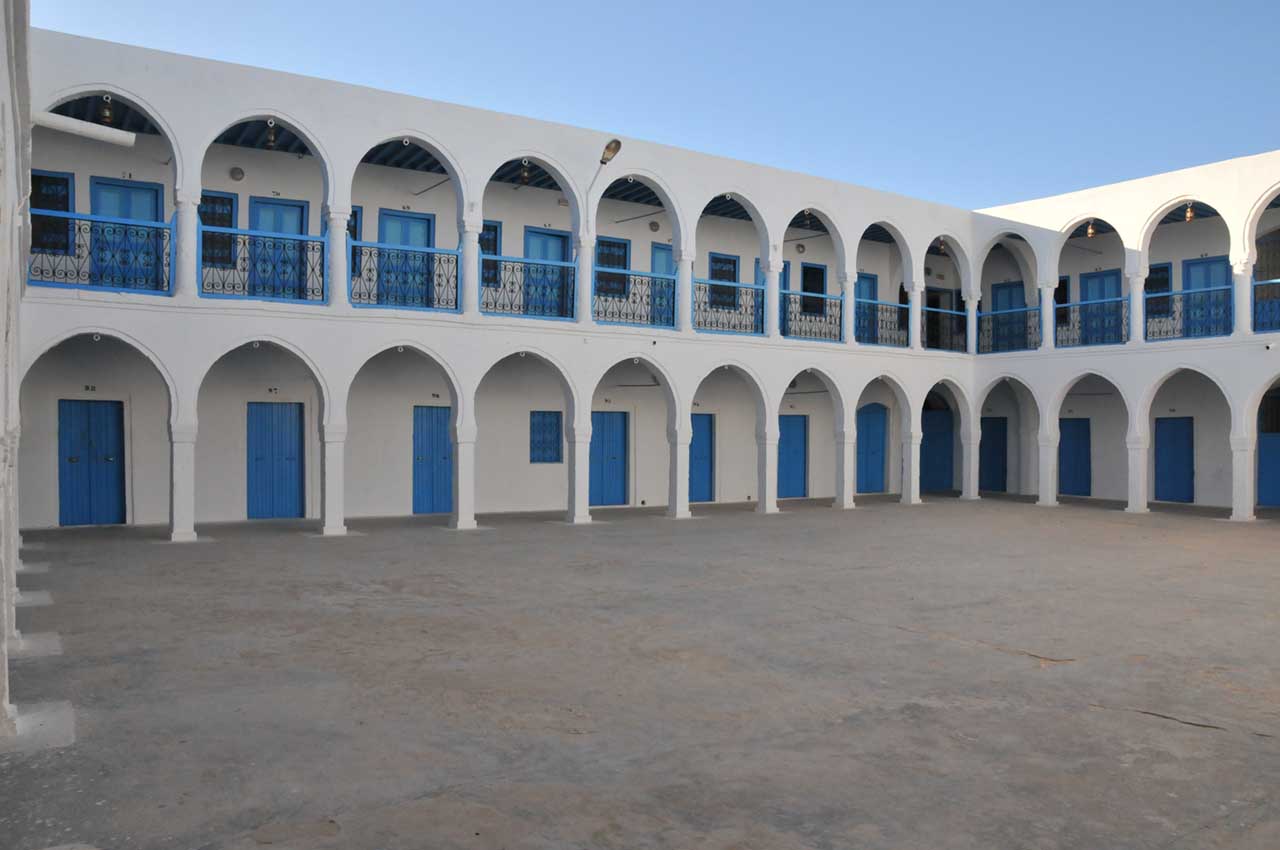
Most members of the Jewish communities live in traditional quarters in the main town of Hara Er Riadh, and Hara Kebira near Houmt Souk.
What to look for inside El Ghriba
The modest exterior of the synagogue hides the rich tapestry of interior decorative and symbolic features.
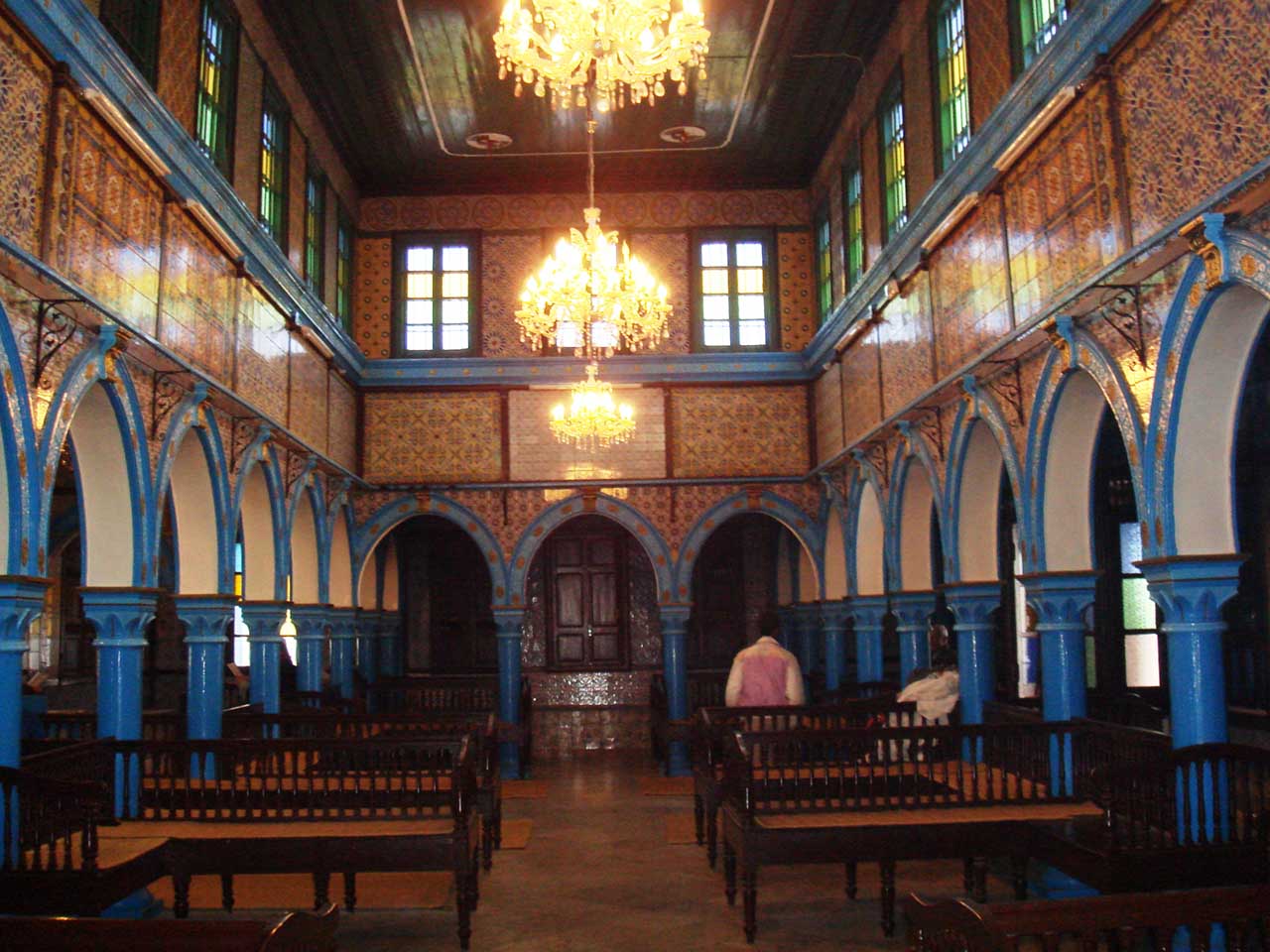
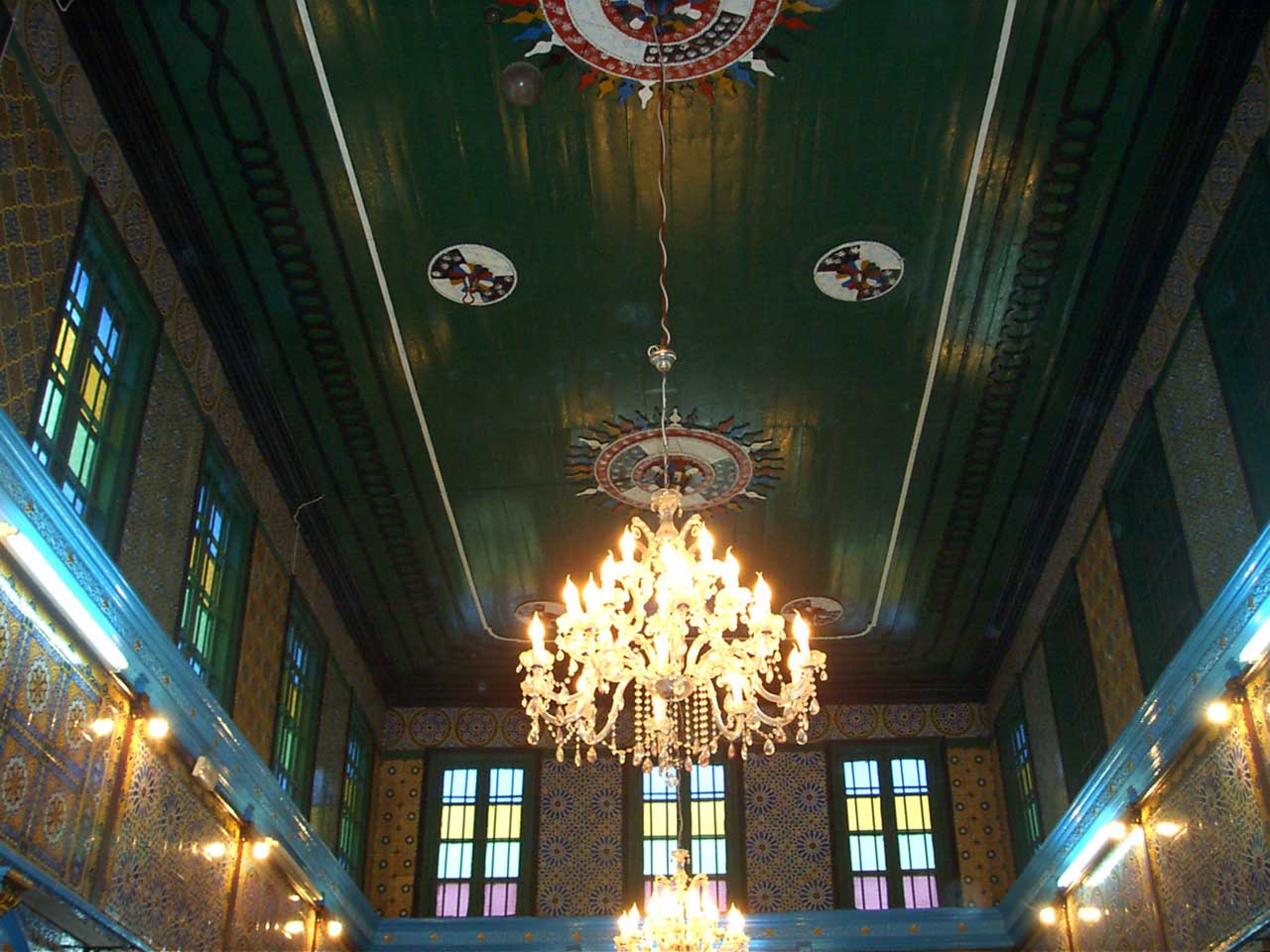
The synagogue displays a strong blue-and-white color scheme throughout, reflected in the rounded horseshoe arches resting on blue columns, the richly patterned ceramic wall tiles, and the hanging chandeliers and lamps.
The Torah Ark, bema, and unusual prayer hall
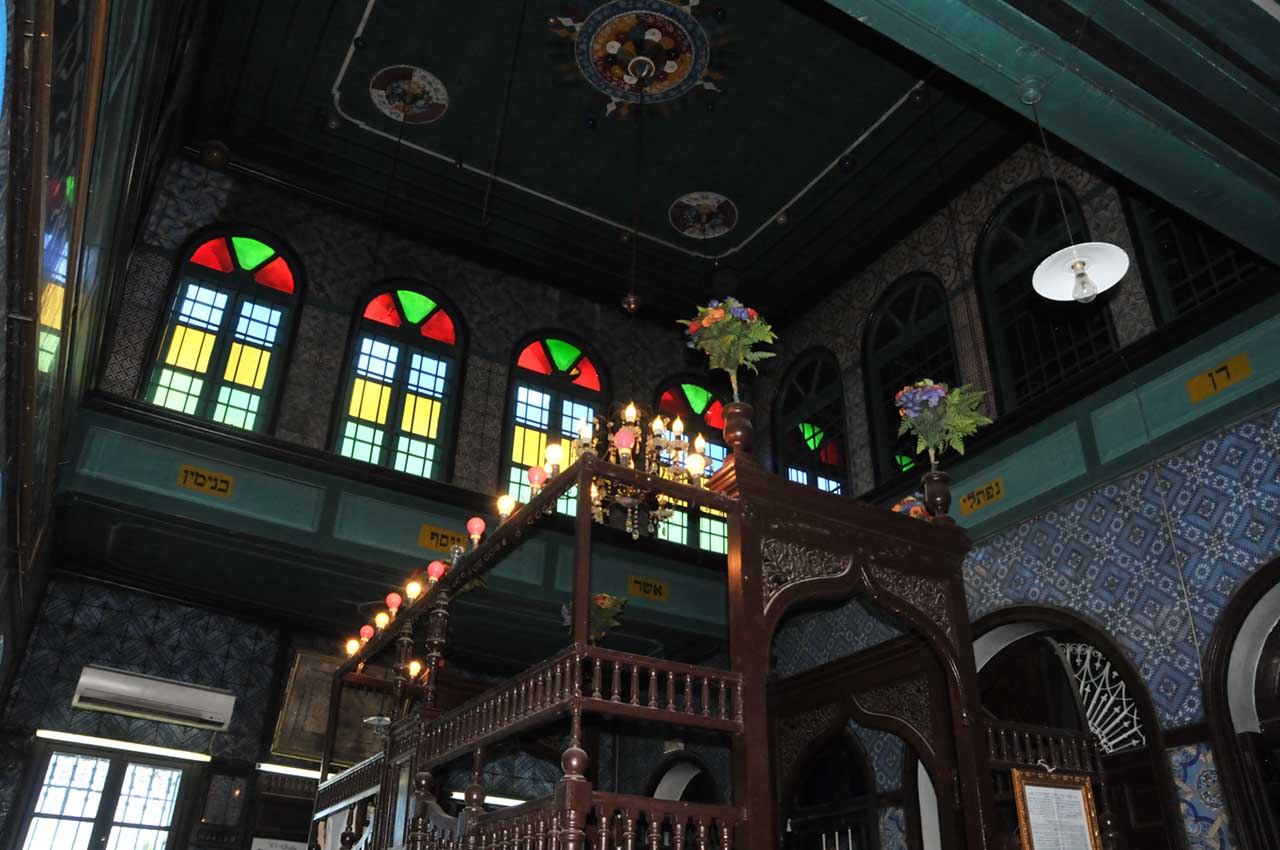
The synagogue features a traditional Sephardic layout. An open courtyard leads into two primary interior halls: a central prayer hall with a prominent reader’s desk under a glass lantern, and an eastern sanctuary housing the Torah Ark cabinets.
One of the main attractions is the interior walls, heavily decorated with hand-painted blue, white, and multicolored ceramic tiles.
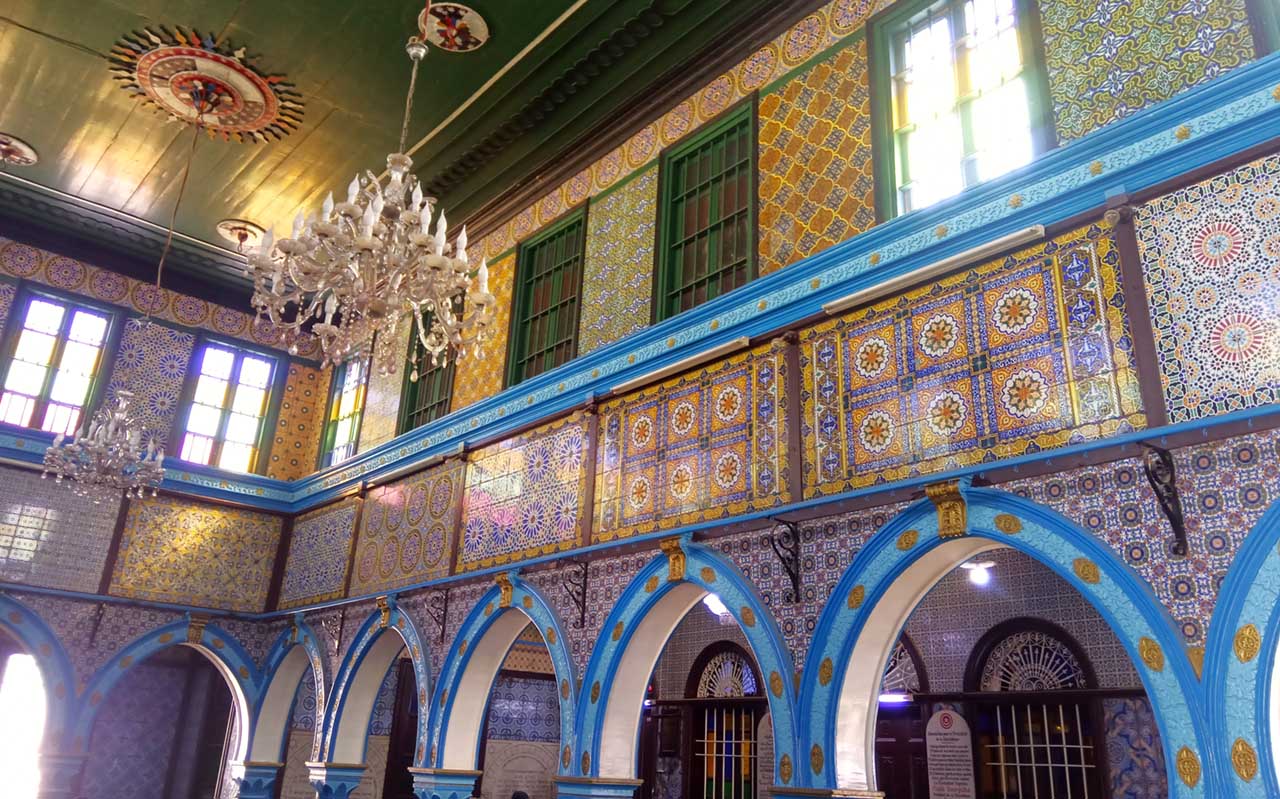
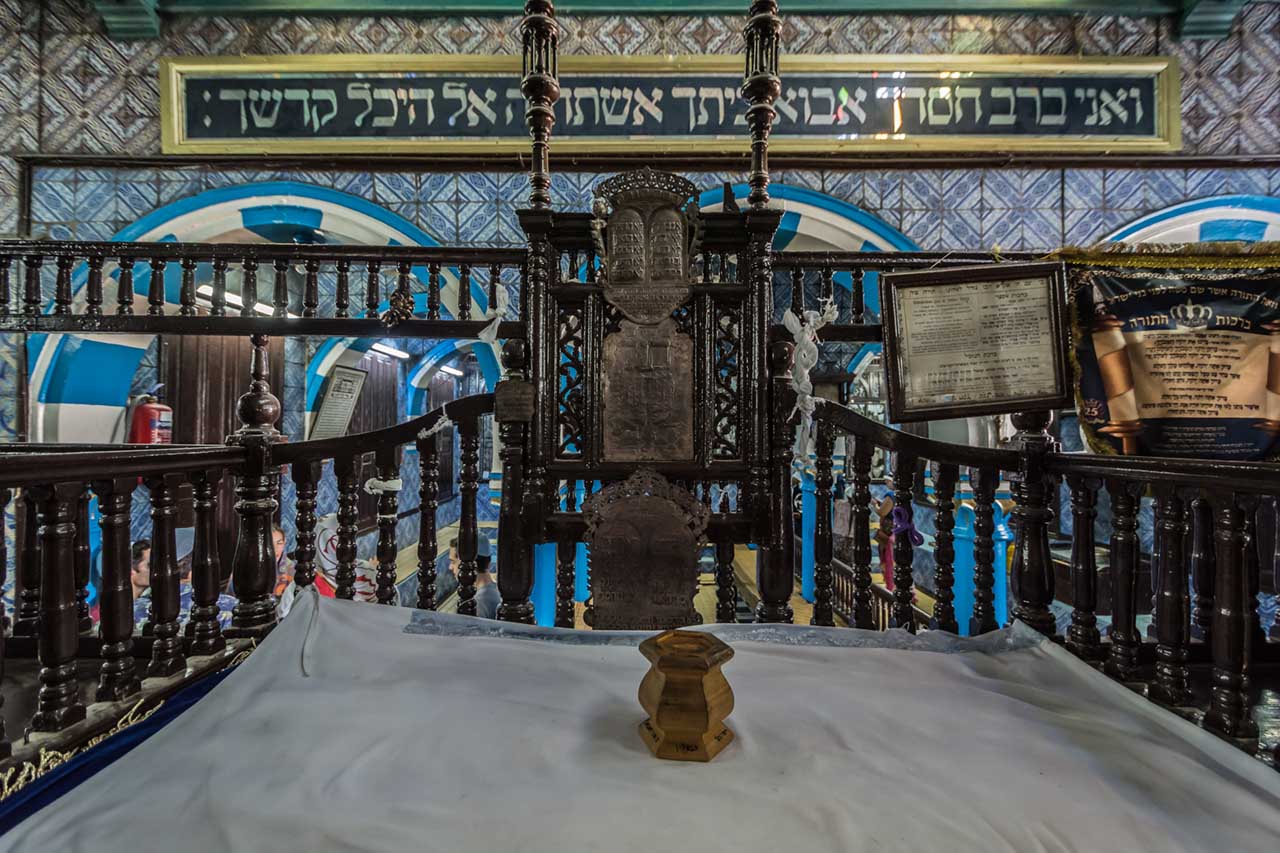
The Torah Ark is the focal point of the synagogue. As the keeper of the Torah scrolls, the ark has richly decorated doors and the surrounding tilework reflects the synagogue’s North African Jewish character.
- The Bema (tevah) is a raised platform from which the Torah is read and occupies a prominent position in the prayer hall.
- The unusual prayer hall is distinctive for its blue-and-white decoration, ceramic tiles, painted or carved ornaments, and rows of columns, creating a rich interior. Its arrangement differs from conventional synagogues, contributing to the building’s distinctive character.
The sacred cave and the tradition of written wishes
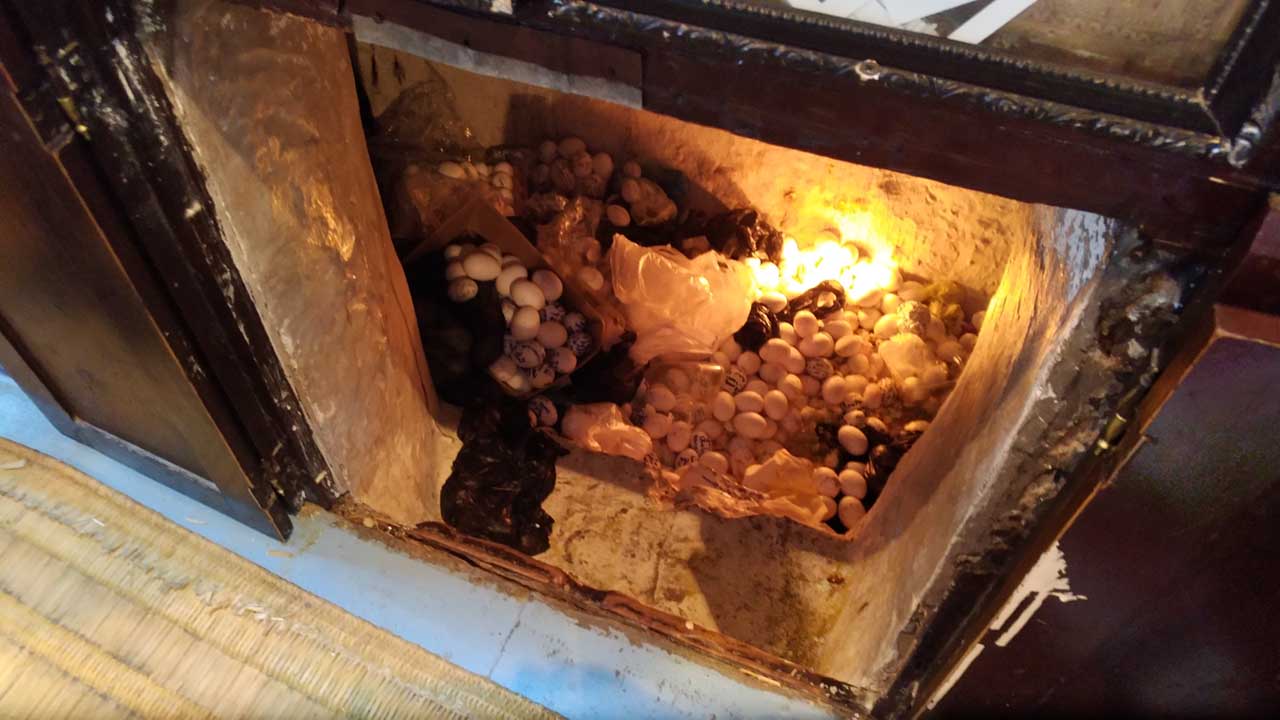
Beneath the Torah Ark is a sacred underground grotto, the resting place of the legendary ‘Ghriba.’
According to legend, a young woman who lived alone in a hut on the island of Djerba died in a fire. However, her body was untouched by the flames, lending credence to the villagers’ belief that she was sacred. They buried her on the exact spot of the fire, which today is a small recess or cave beneath the Holy Ark.
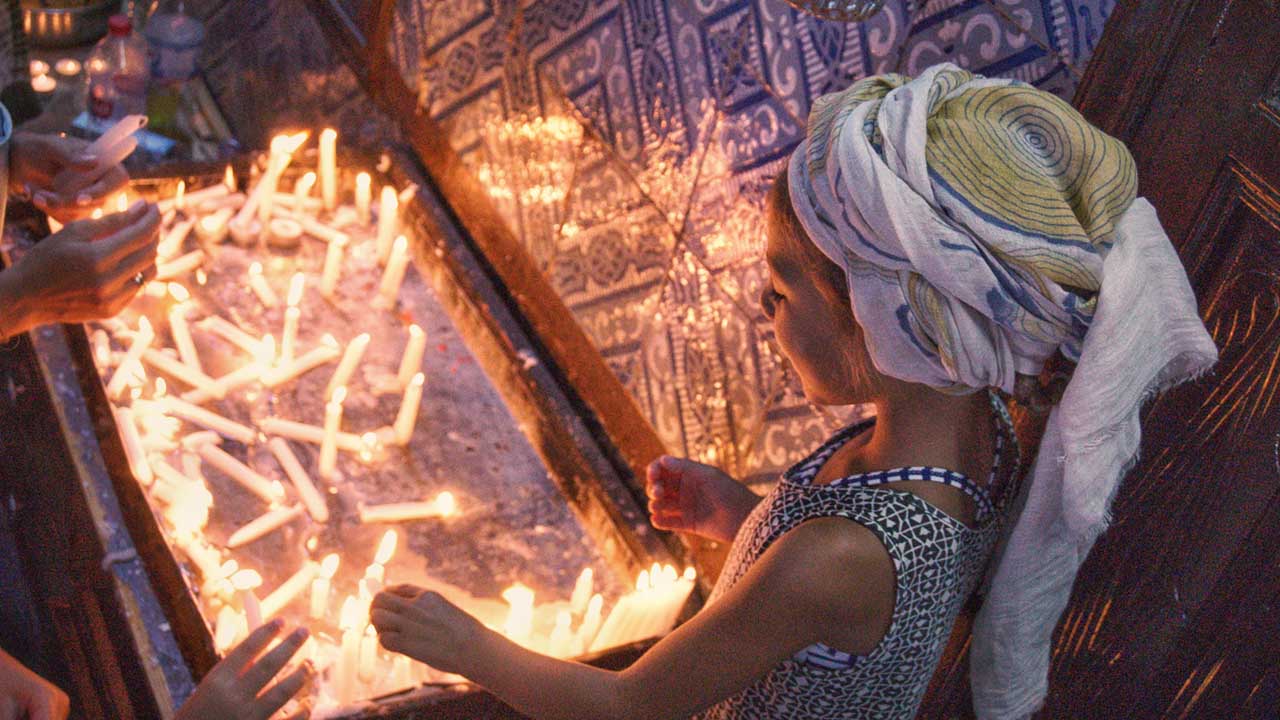
Pilgrims make their way into the small crypt, through a narrow opening in the wall, and place votive eggs, candles, and personal written wishes inside the grotto. The site is central to the annual Lag BaOmer festival of prayer for miracles and fertility, attracting both Muslim and Jewish women.
The annual El Ghriba pilgrimage
The annual El Ghriba pilgrimage is a centuries-old Jewish tradition that celebrates the Lag BaOmer holiday. El Ghriba Synagogue is core to the activities of international pilgrims for candle lighting, prayer, and placing written wishes inside the sacred cave in which ‘Ghriba’ lies.
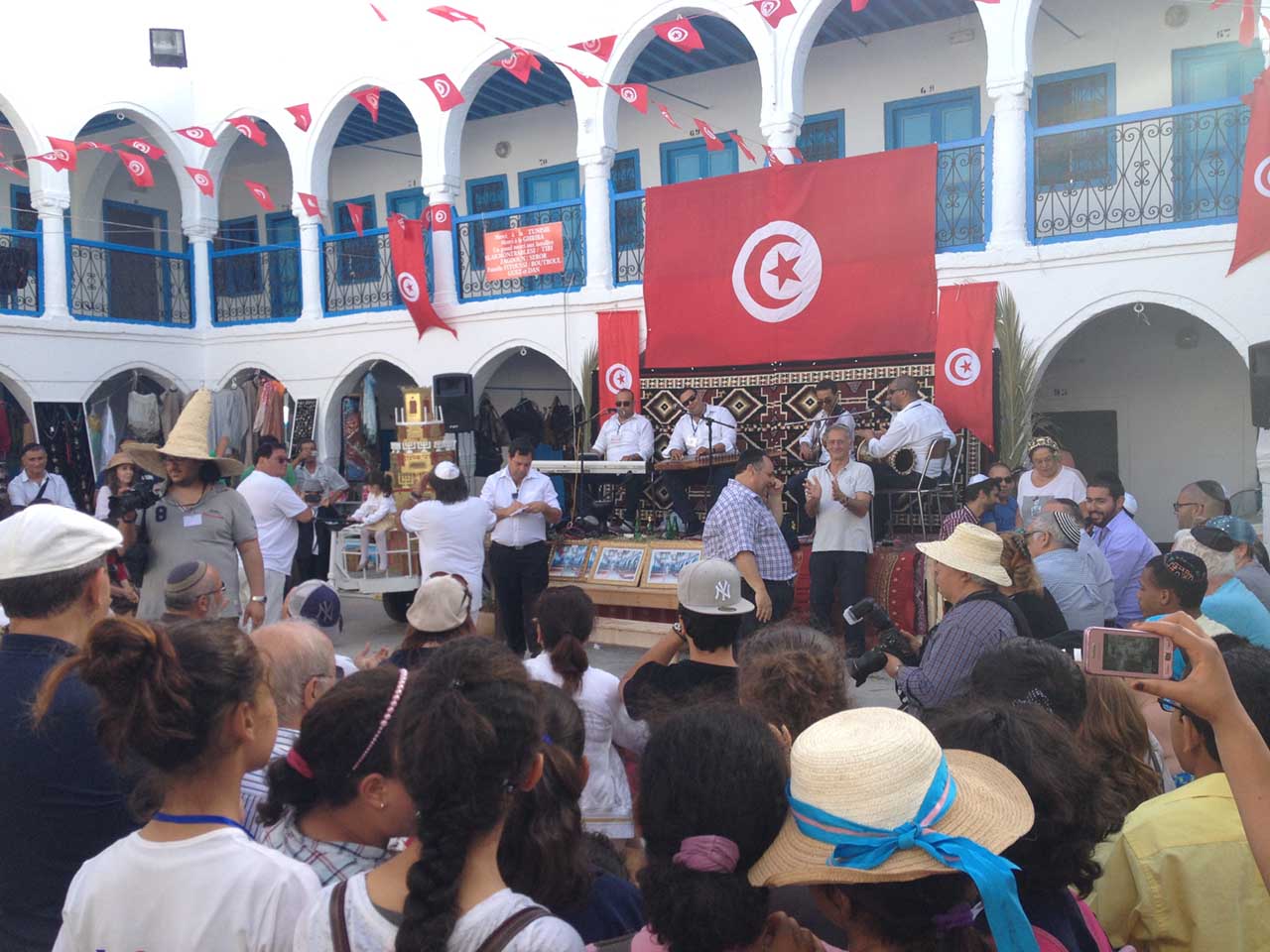
The pilgrimage is a spiritual anchor for the Jewish population and global diaspora from Tunisia. Traditionally, the celebration includes music, food, fundraising, and communal gatherings.
The Minara procession
The annual Minara procession takes place at the end of the pilgrimage. A five-level hexagonal candelabrum is decorated and paraded through the town, accompanied by music and singing.
Women decorate the Minara with colorful scarves for good fortune, fertility, and marriage. The tower is also decorated with menorah motifs, and the names of famous Tunisian rabbis and the 12 tribes of Israel, representing the connection to local heritage and Jewish tradition.
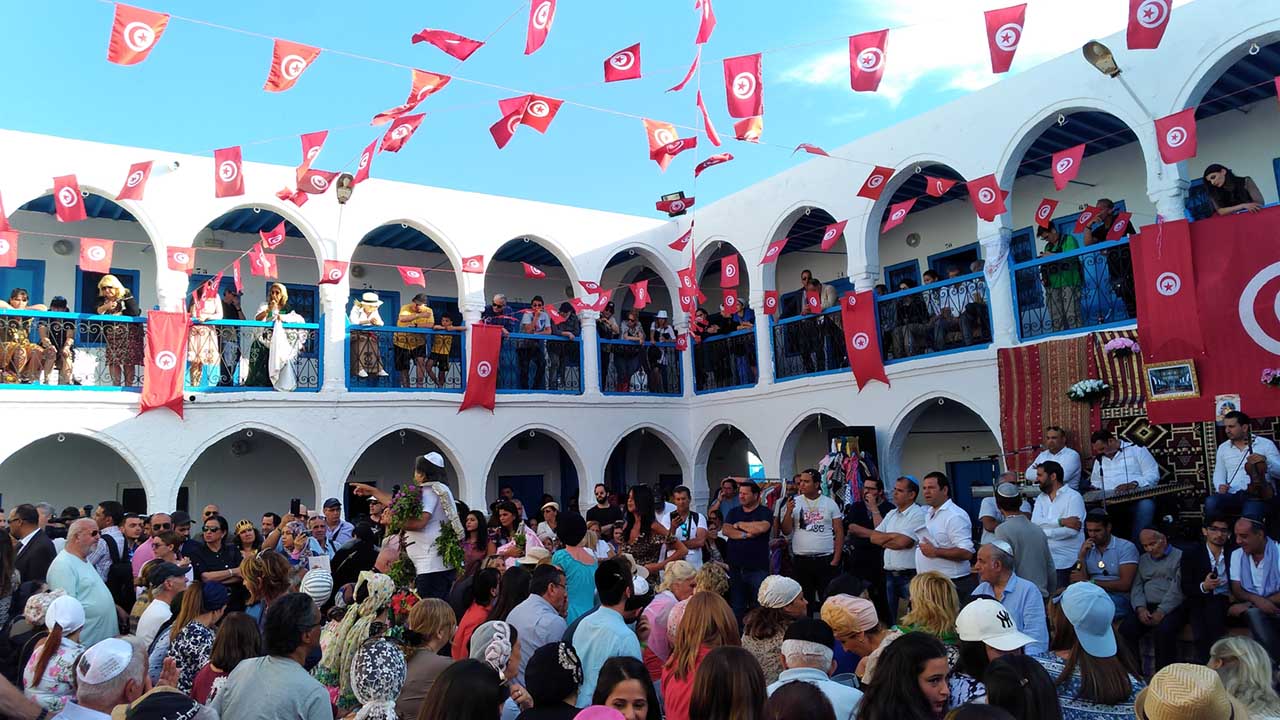
An auction is held to raise money for the synagogue maintenance, followed by the Minara procession and the accompanying celebration at which pilgrims dance, play traditional drums, sing, and toss candy as the cart carrying the Minara passes by.
El Ghriba and Djerba’s UNESCO World Heritage status
Djerba was inscribed on the UNESCO World Heritage List in 2023 as “Djerba: Testimony to a settlement pattern in an island territory.” The designation recognizes the island’s settlement system, shaped by communities of different cultures and faiths living peacefully alongside one another.
El Ghriba Synagogue is included within this serial World Heritage property as component 1640-017, while nearby Hara Sghira (Erriadh) is component 1640-016. The UNESCO status applies to Djerba’s wider cultural and settlement landscape, and not to El Ghriba as an independent World Heritage Site.
This places the synagogue within a story that encompasses Djerba’s mosques, Jewish neighborhoods, villages, agricultural landscape, and the long history of different communities sharing the island. UNESCO specifically identifies the synagogue among the site’s important religious and architectural elements.
The El Ghriba pilgrimage in 2026
The 2026 pilgrimage attracted around 500 participants and was held from April 30 to May 6. It marked a careful and gradual return of the annual international pilgrimage.
The 2026 pilgrimage also marked the return of the Minara procession.
Travel & Access Update
El Ghriba is an active place of worship with heightened security and controlled access. Visitors should check current access conditions, opening arrangements and any pilgrimage-related restrictions before traveling to the synagogue. You can also review the current travel advice for Tunisia before your visit.
How to visit El Ghriba Synagogue
Taxis are readily available to transport visitors to the synagogue from Houmt Souk, Midoun, or major island hotels. Visitors should expect security checks at the entrance. Access procedures can change, so check current conditions before visiting.
Visitors are also reminded not to rely on the fixed timetable, but rather to double-check operating hours, as these can change around Jewish holidays, security events, and pilgrimage dates.
Prefer to visit El Ghriba with a guide? This highly rated, very popular and affordable half-day Djerba tour includes the synagogue along with Guellala, Djerbahood and Houmt Souk, with hotel pickup included.
Dress code and visitor etiquette
Visitors are requested to dress modestly, with covered heads, shoulders and knees. Shoes must also be removed before entering the main sanctuary. Veils will be supplied on request.
All security instructions must be followed without argument, and as the synagogue is an active place of worship, visitors must avoid interrupting prayer or photographing worshipers without permission.
How long to spend at El Ghriba
You can spend 30 minutes to an hour exploring the synagogue. This will give you enough time to see the main courtyard, view the interior with its distinctive and colorful mosaic tiles and stained glass, and pass through the security checks.
| Item | Details |
|---|---|
| Location | Er Riadh, Djerba |
| GPS | 33.8139, 10.8594 |
| From Houmt Souk | About 7 km south |
| Getting there | Taxi from Houmt Souk, Midoun or the main hotel areas |
| Time needed | 30 to 60 minutes |
| What to see | Prayer hall, Torah Ark, bema, blue-and-white tilework and sacred grotto |
| Dress | Cover head, shoulders and knees; remove shoes inside |
| Access | Security checks and controlled entry |
| Annual pilgrimage | Lag BaOmer, usually in spring |
| Nearby | Djerbahood, Houmt Souk and Guellala |
What to combine with a visit to El Ghriba
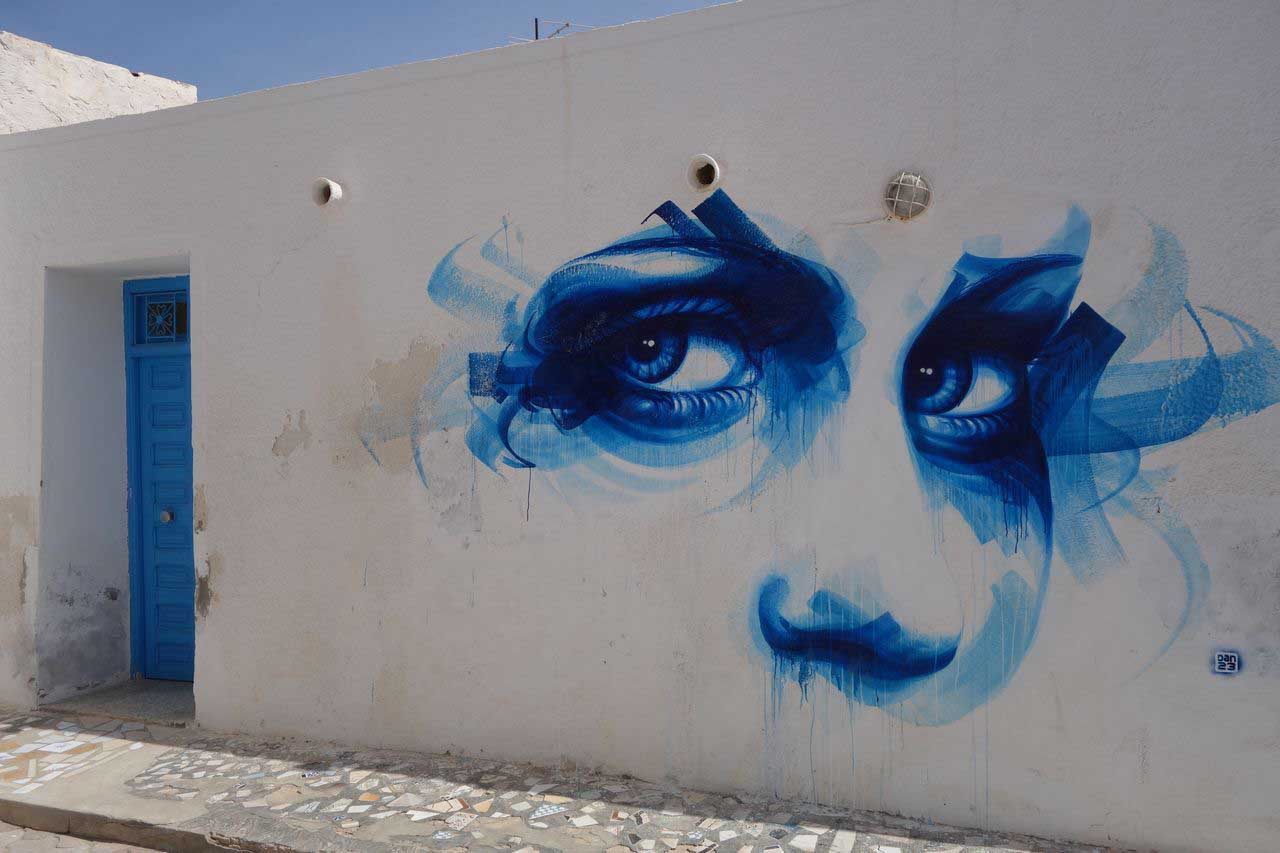
Combine a visit to the synagogue with nearby coastal and cultural highlights, including the street art village of Erriadh, the bustling markets of Houmt Souk, and the pottery workshops in Guellala.
Combining El Ghriba with the Djerbahood open-air street art museum works well because both can be visited around Erriadh without crossing the island several times.
Want to see more of Djerba? Browse these popular tours and experiences covering the island’s cultural sites, villages and attractions.
Conclusion
El Ghriba matters not only as a place of worship, but as a living reminder of Djerba’s Jewish heritage, its distinctive North African synagogue architecture and the community that gathers here for the annual pilgrimage. Its ancient origins belong to tradition; the building visitors see today reflects much later reconstruction.
The richly decorated interior makes El Ghriba worthwhile even for visitors primarily interested in architecture or Tunisia’s cultural heritage. It remains, however, an active place of worship. Visitors should check current access conditions before making the journey.
Compare hotels and guesthouses across Djerba to find the best place to stay for your trip.


