
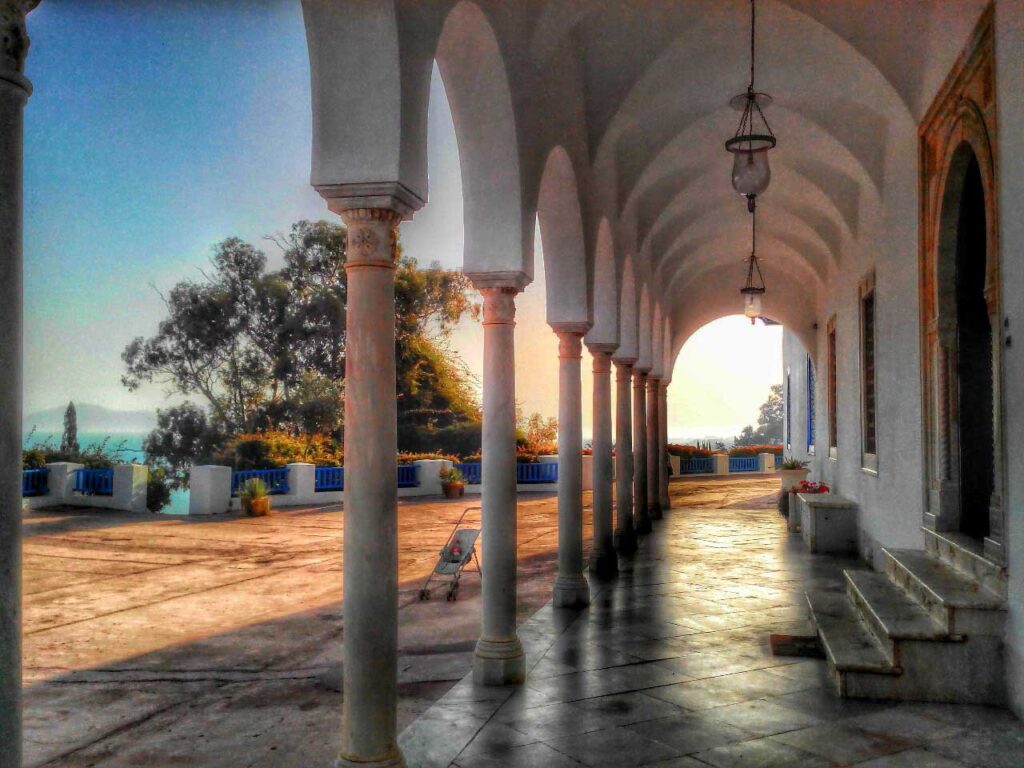
When visiting the Ennejma Ezzahra Palace in Sidi Bou Said, Tunisia, you can expect to see elaborate Arab-Islamic architecture set in stunning terraced gardens, with sweeping views across the Mediterranean Sea.
The cliffside early 20th-century palace and estate was built for painter and musicologist Baron Rodolphe d’Erlanger. It is now home to the Center for Arab and Mediterranean Music, whose former domestic service wing houses an important collection of regional and international musical instruments.
Last updated: August 2026
What is Ennejma Ezzahra Palace?
The name of the historic early 20th-century mansion, Ennejma Ezzahra Palace, means “Star of Venus.”
Renowned for its Arab-Andalusian and Moorish architecture, the palace is built in a quiet, cliffside setting in Sidi Bou Said and serves as both a preserved historic house and a museum devoted to musical heritage.
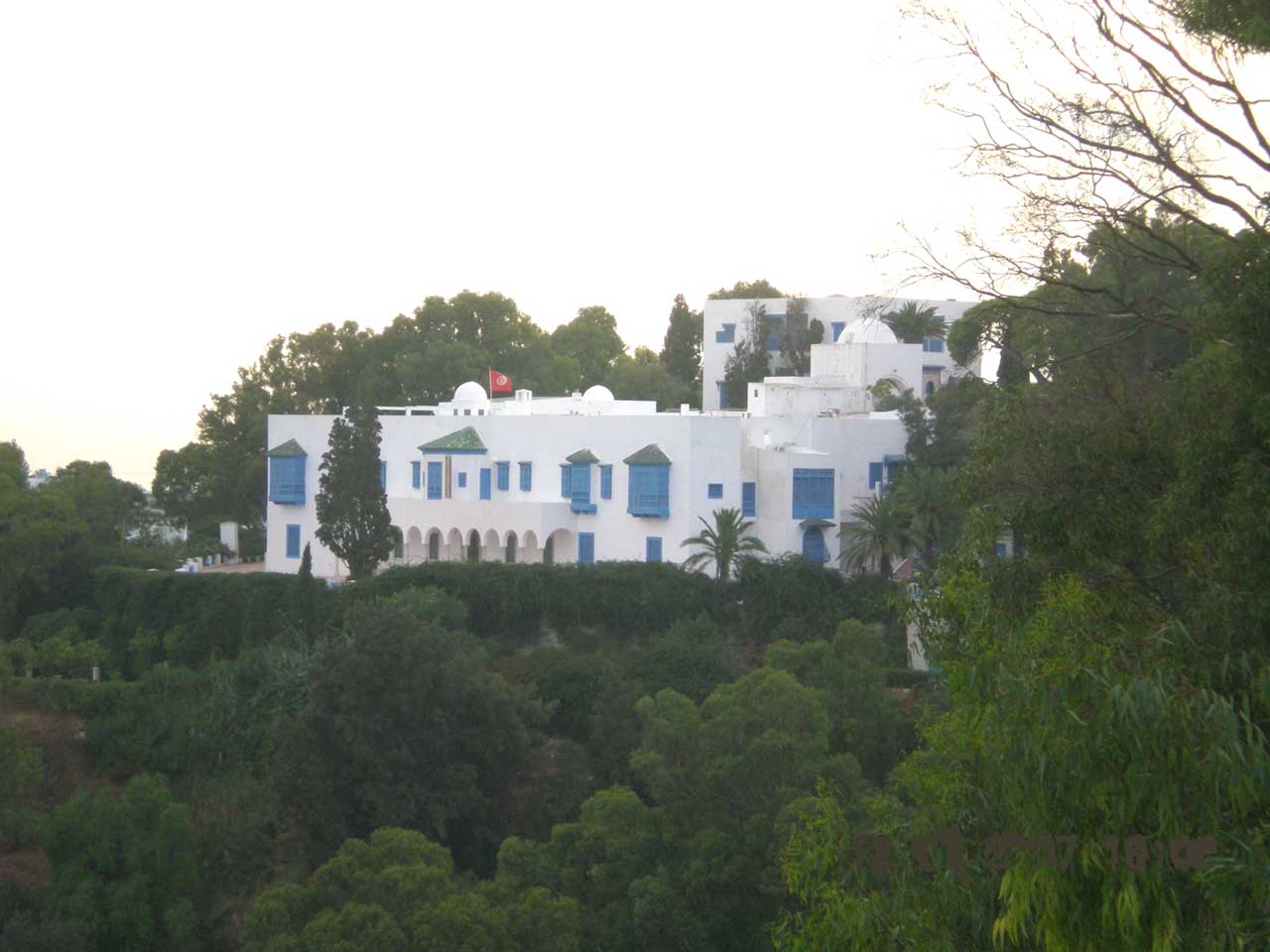
The “Star of Venus” was built as a private residence for French-born painter and musicologist Baron Rodolphe d’Erlanger between 1912 and 1922 and is now home to the Center for Arab and Mediterranean Music.
Who was Baron Rodolphe d’Erlanger?
French-born Rodolphe d’Erlanger (1872-1932) was a painter and musicologist, regarded as a pioneer in the study of Arabic music.
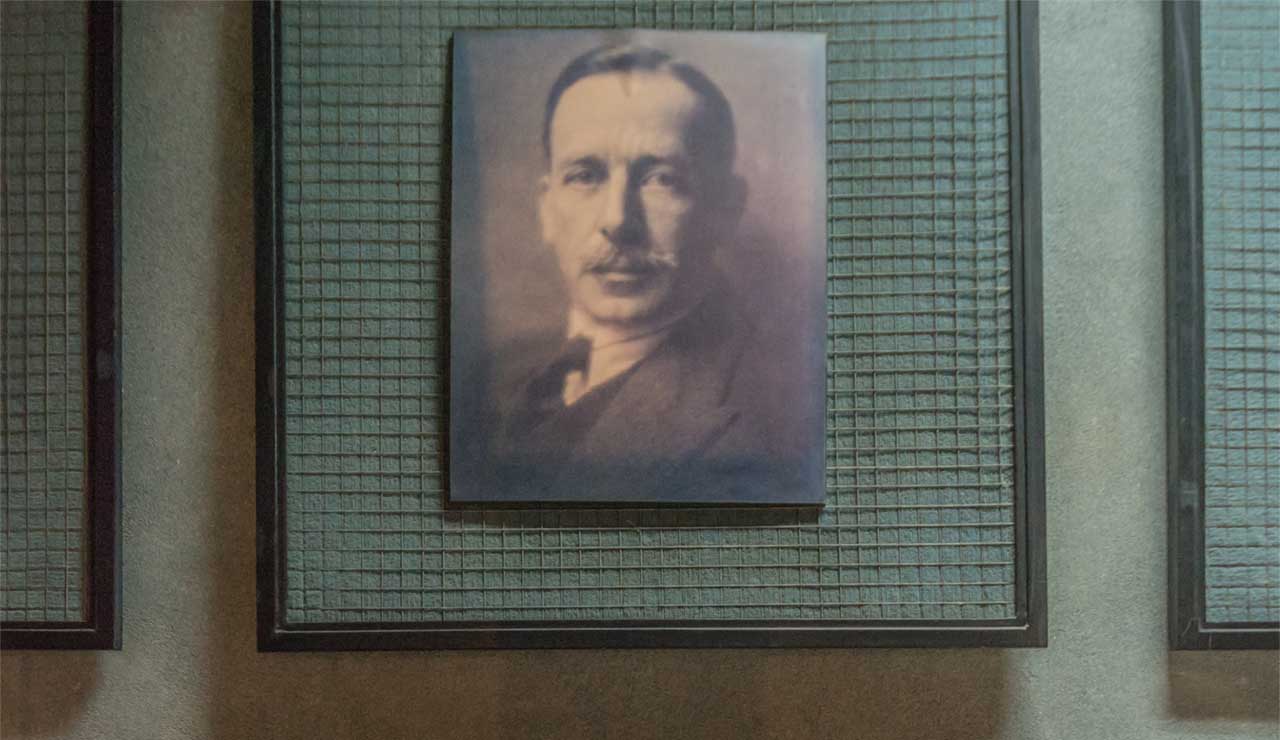
The son of a wealthy French banking family, Baron d’Erlanger made Sidi Bou Said in Tunisia his permanent home in 1911. He surrounded himself with Tunisian and Arab musicians and scholars, making him the first Orientalist to settle in an Arab country and surround himself with music scholars and performers.
Baron d’Erlanger authored the major six-volume study and collection of Arabic music theory and historical translations, “La Musique Arabe” which was published between 1930 and 1959.
His musicological archives from 1910 up until his death in 1932 were added to the UNESCO Memory of the World International Register in 2023.
In 1991, the Tunisian government ordered the creation of the Center for Arab and Mediterranean Music in the palace.
How Ennejma Ezzahra was built
The Ennejma Ezzahra Palace is regarded as a jewel of Arab-Islamic and Moorish architecture and features intricate stucco, arched doorways, and patterned tiles. It draws strongly on Maghreb and Andalusian traditions for its style.
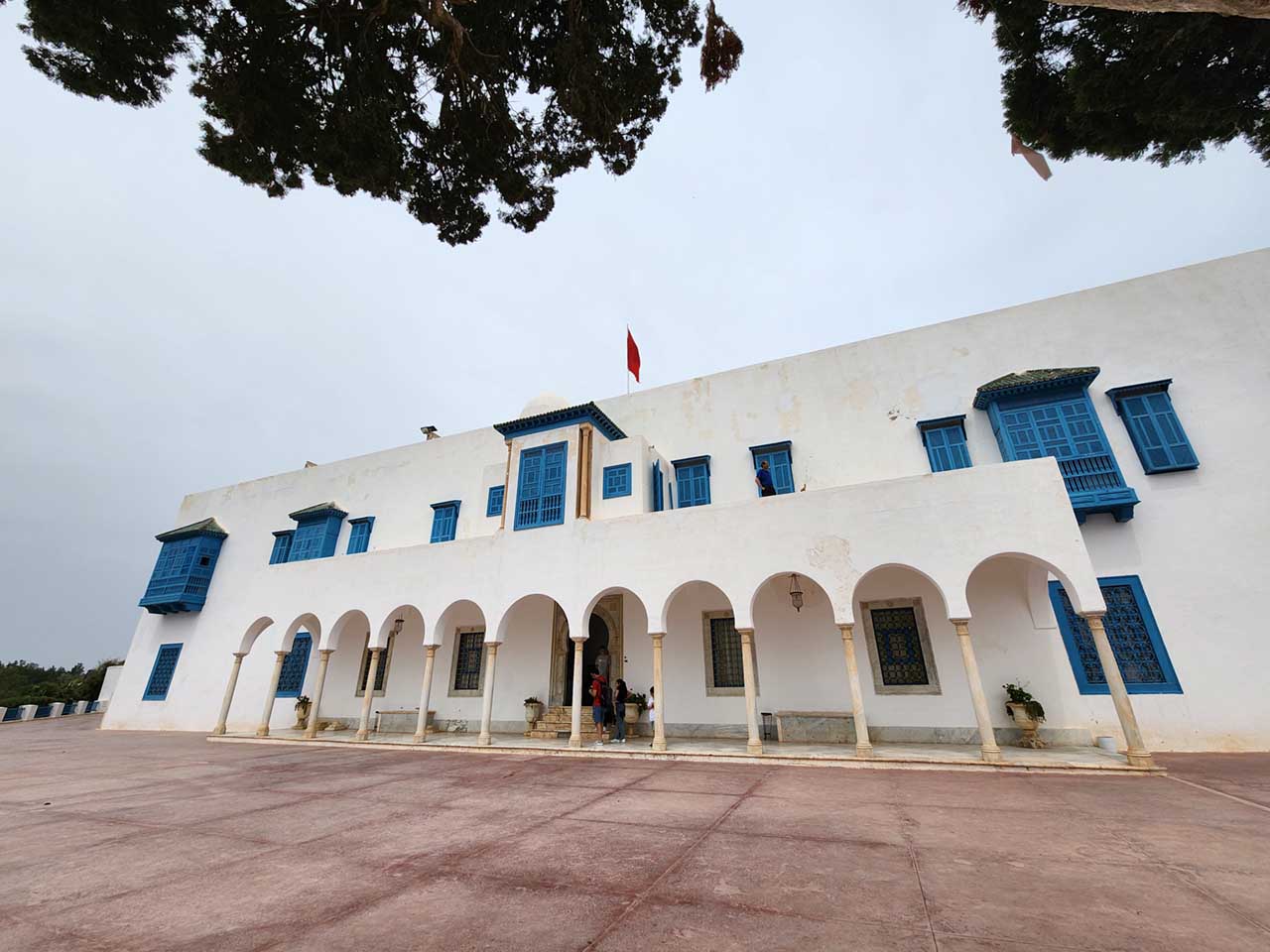
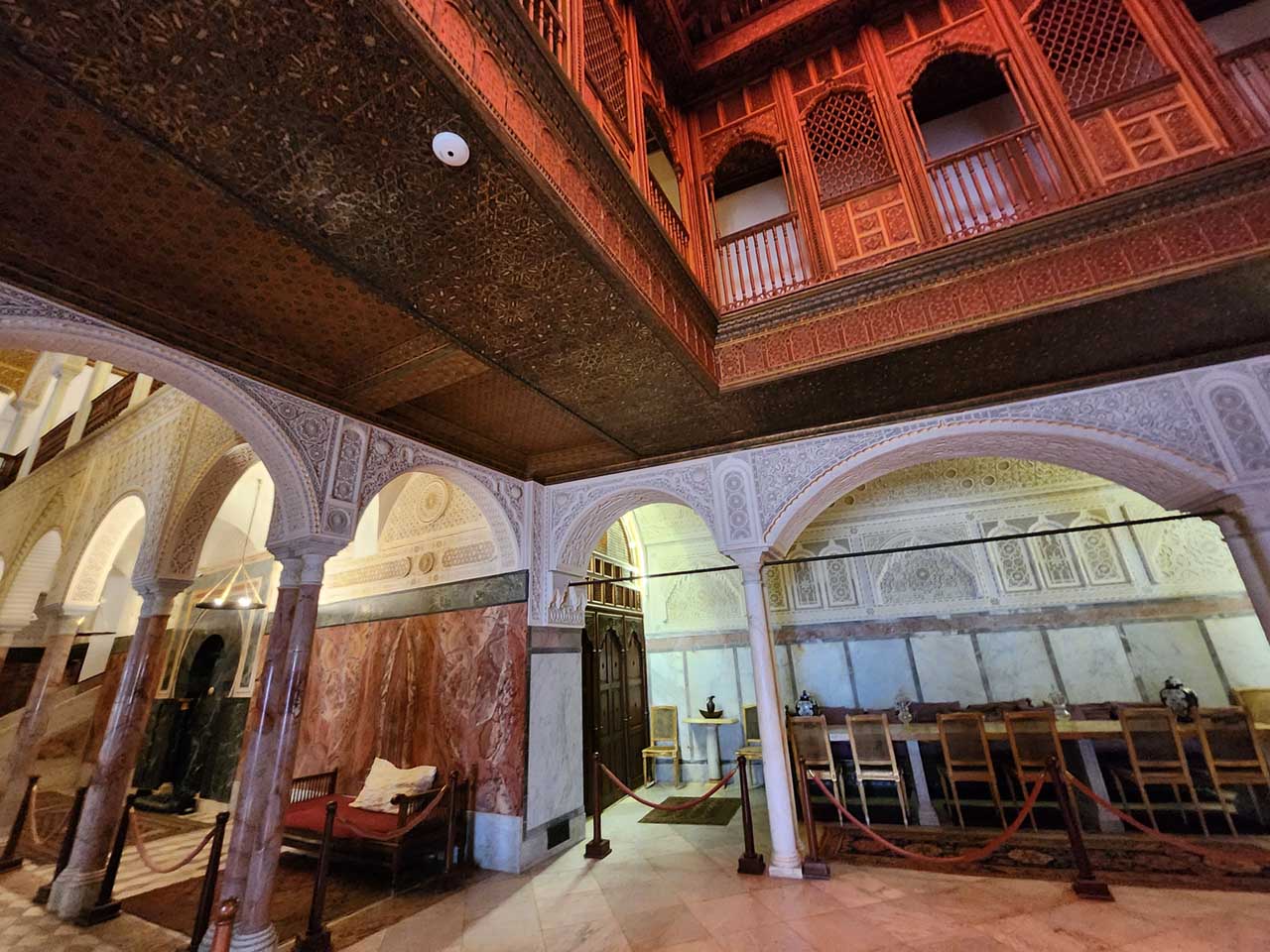
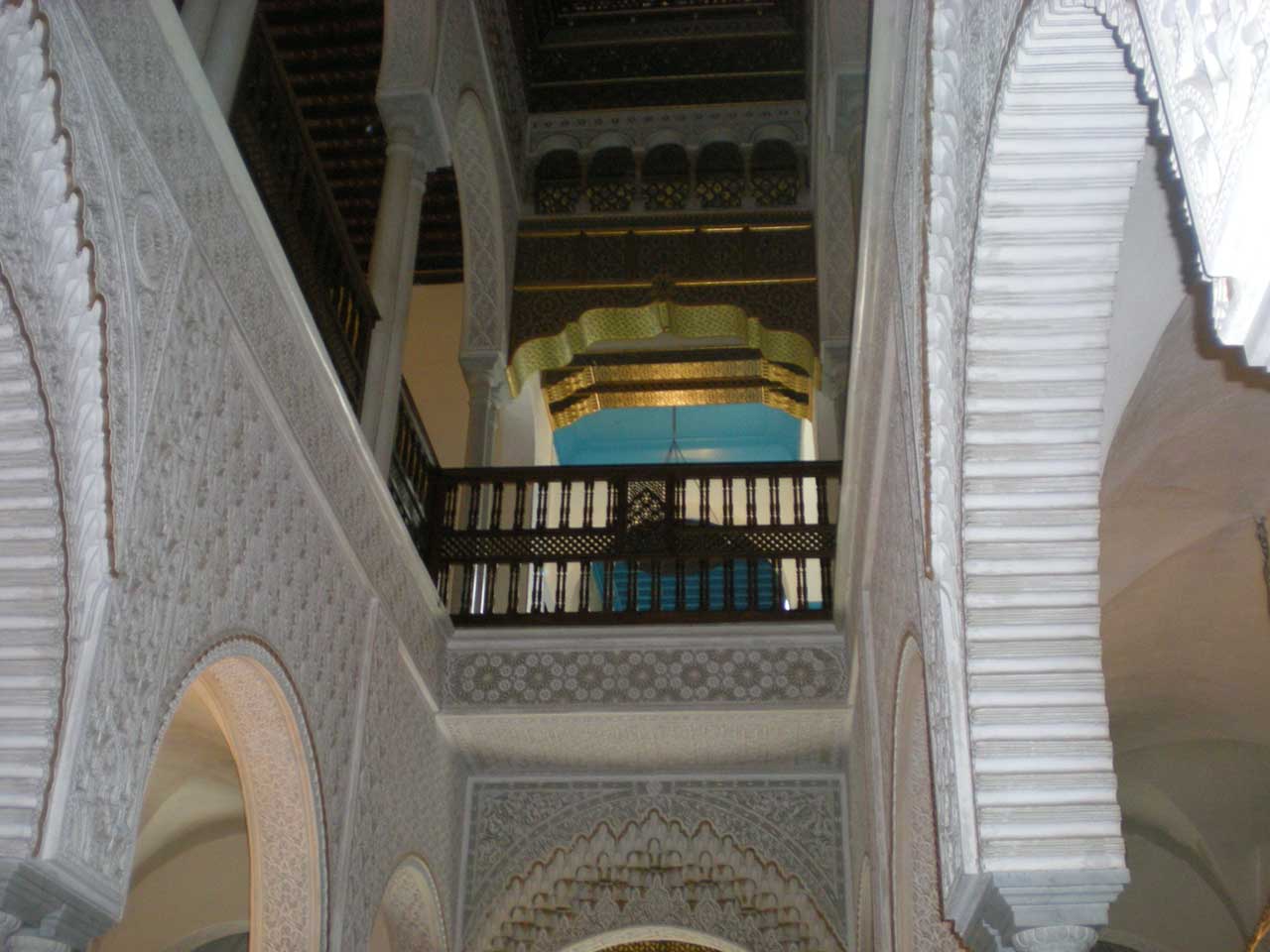
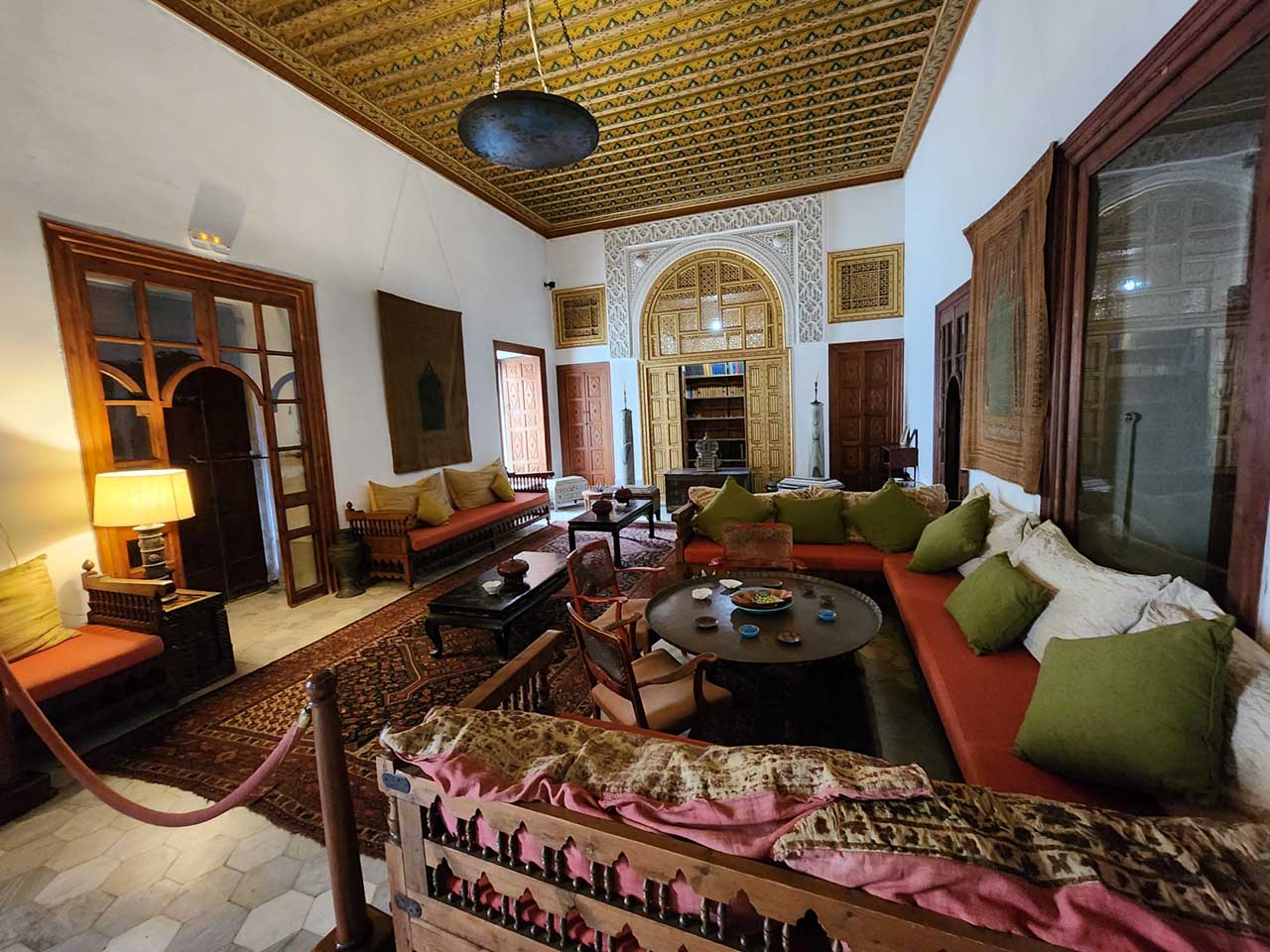
Constructed on a steep Cape Carthage hillside, Baron d’Erlanger took an active role in the overall design and decorative features. It took regional craftsmen from 1912 to 1922 to complete his “Star of Venus” palace, overlooking the Gulf of Tunis.
He hired craftsmen from Tunisia and Morocco, and reportedly Egypt, who created hand-carved wood ceilings with plaster details and tile mosaics. European specialists handled the installation of plumbing and electricity.
The palace includes several unusual features: blue woodwork, white marble columns, fountains, and open courtyards.
What to look for inside the palace
The baron’s painting studio and the world-renowned collection of traditional musical instruments are just two of the many highlights to see inside the palace.
Visit the grand reception hall and admire the central indoor fountain fed by a cooling marble water channel, as well as the intricately carved gilded cedar-wood ceilings paired with geometric mosaic ceramic wall tiles featuring geometric arabesques and stucco friezes.
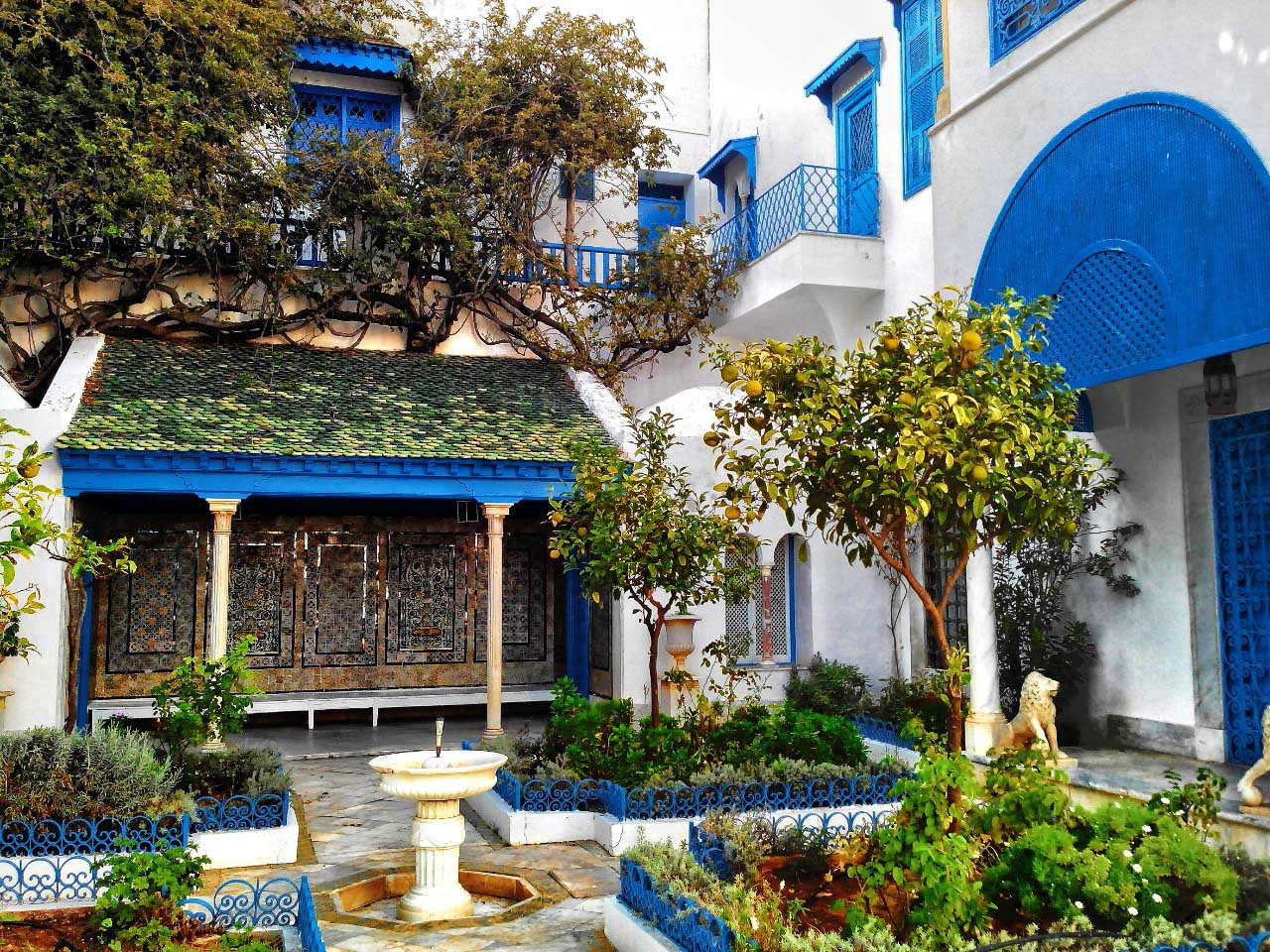
The palace is deeply connected to Sidi Bou Said through both its cliffside location and its role as an anchor of Arab-Mediterranean cultural music.
Baron d’Erlanger helped establish Sidi Bou Said’s iconic blue-and-white identity. This is reflected in the interior carved blue wooden window screens painted in the distinct cobalt blue color scheme of the hillside village.
The estate preserves the d’Erlanger family’s reception rooms, courtyards, and the extensive collection of rare musical instruments and fine art.
Visitors will experience a sharp visual contrast between the simple, whitewashed exterior and the lavishly crafted interior spaces.
The musical instrument museum
The music museum pays homage to Tunisian musical heritage, a rich mixture of Arab, Andalusian, Ottoman, Berber, and Sub-Saharan African roots.
It preserves traditional instruments such as the Darbuka, Mezwed, and Oud, whose vibrant sounds feature in folk songs and spiritual healing rituals.
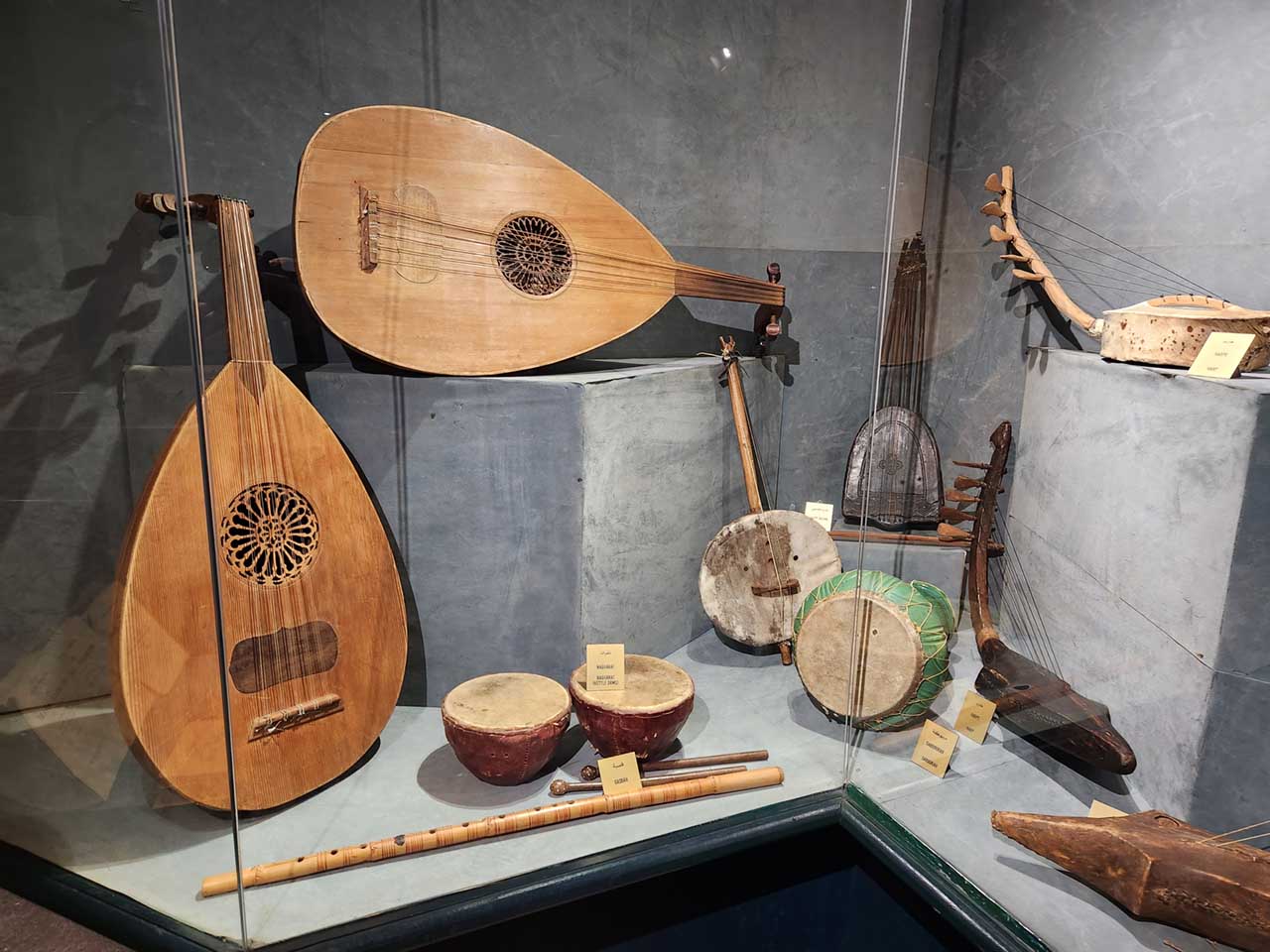
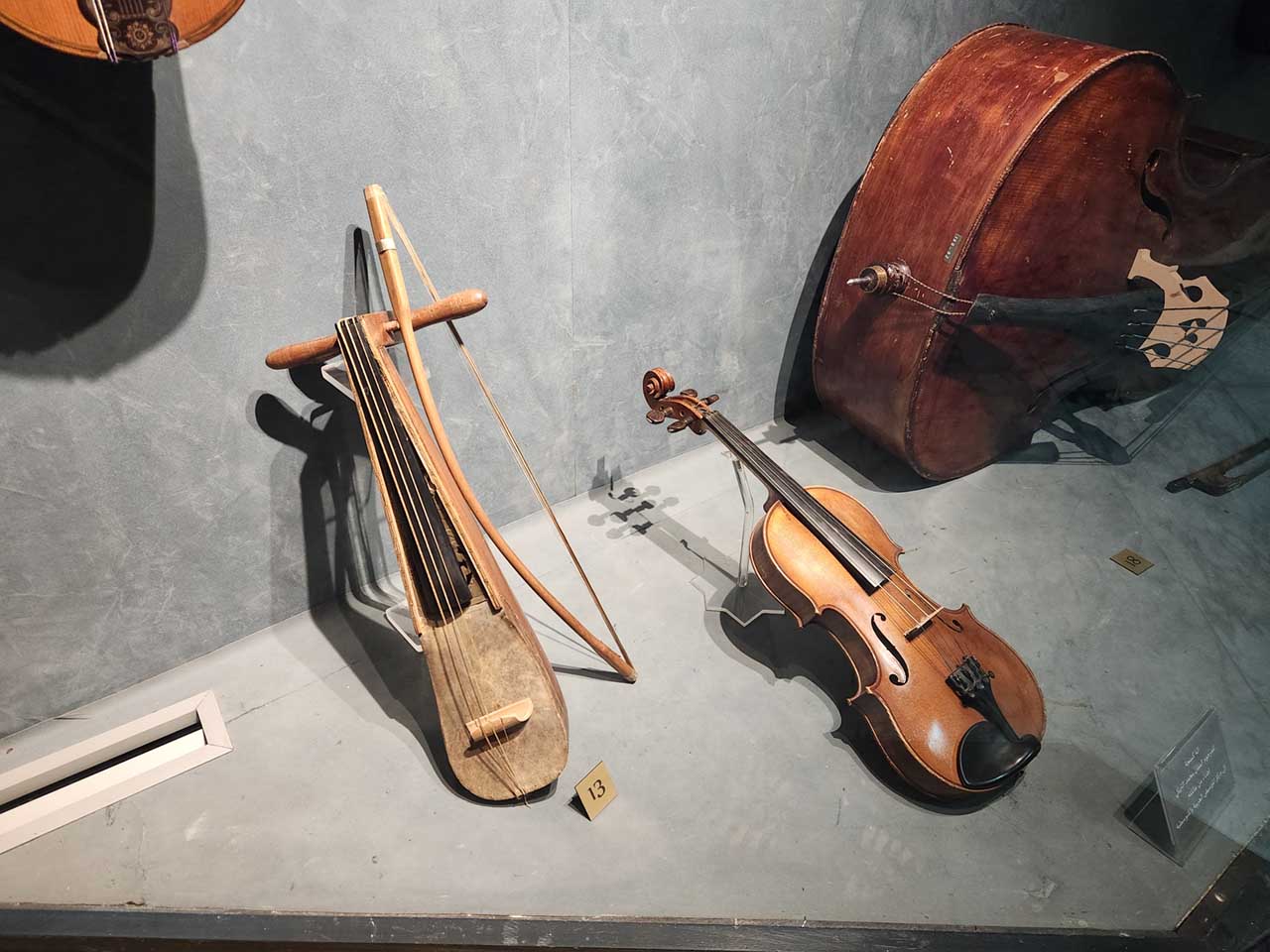
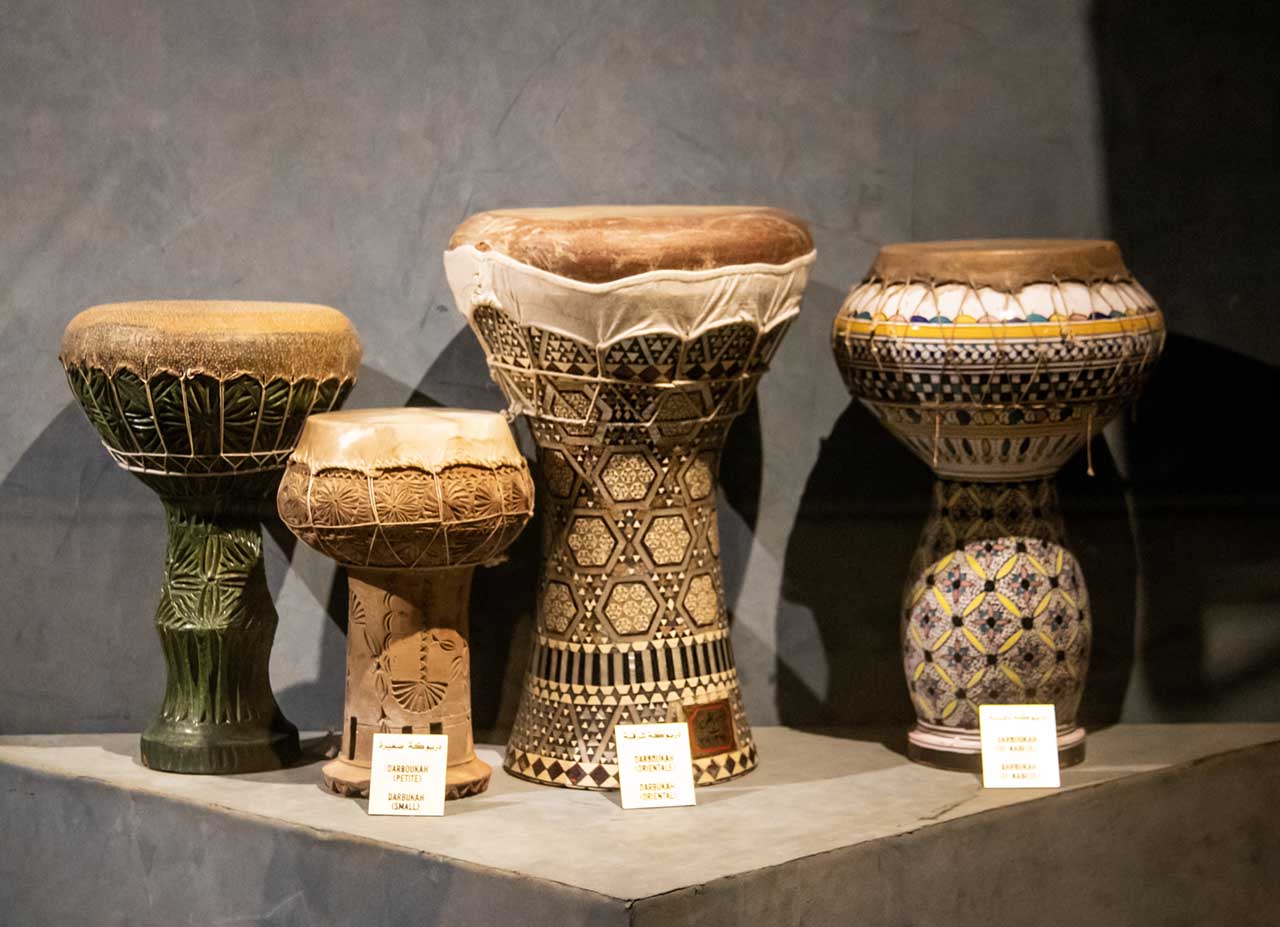
The collection of rare musical instruments is exhibited in two rooms of a former domestic service wing in the palace. The collection contains more than 250 instruments, including string, wind, and percussion.
Another section of the exhibition features instruments from Baron d’Erlanger’s personal collection.
Baron d’Erlanger’s painter’s studio
The life and works of Baron d’Erlanger, an Orientalist painter and musicologist, are today preserved in his refurbished painting studio.
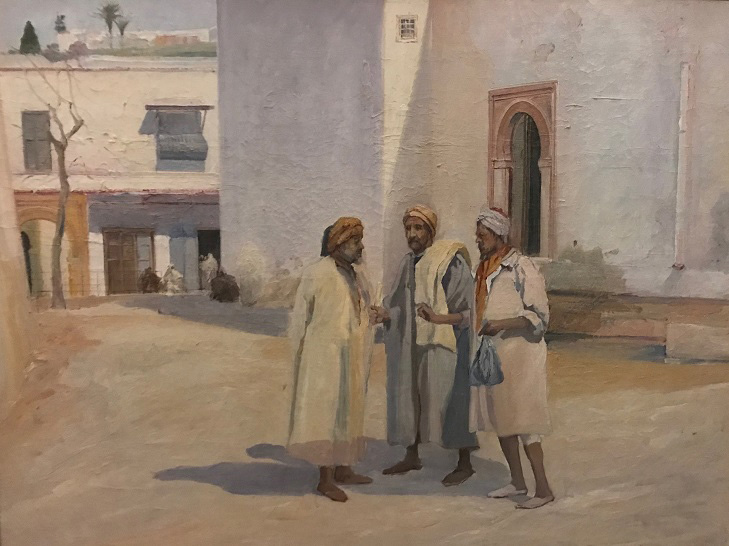
Visitors can view a large collection of his personal Orientalist paintings in his studio and home, which function as the Center for Arab and Mediterranean Music.
D’Erlanger’s paintings and furniture were carefully restored during an 18-month refurbishment and restoration project, during which time the exhibition was closed to the public.
The gardens and Mediterranean views
The Ennejma Ezzahra Palace features terraced Andalusian gardens, cascading cliffside terraces, and sweeping panoramic views of the Gulf of Tunis and the Mediterranean Sea. This view is one of the highlights, even for visitors with little interest in music.
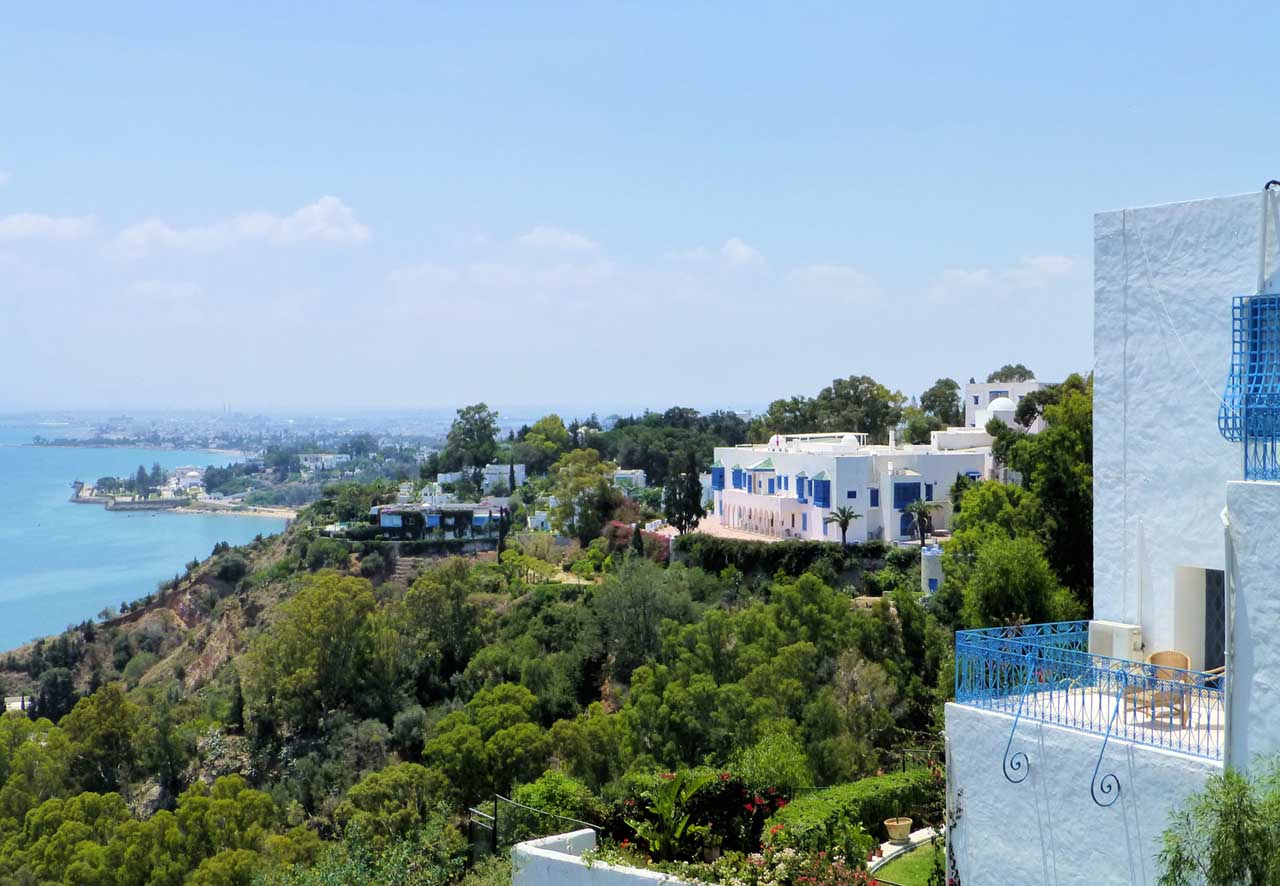
On the steep slopes of Cape Carthage, the terraced layout provides quiet outdoor spaces. One of the gardens is named the Andalusian Garden and is designed around a long, oblong reflecting pool bordered by rows of cypress trees and water jets.
The Persian Garden and surrounding terraces feature rose bushes, hibiscus, and Seville orange trees.
Ennejma Ezzahra as a living music center
The music center connects d’Erlanger’s foundational musicology not only with his rare collection of instruments but also with the preservation of his monumental writings on Arabic music and the active performance and archiving of the regional heritage he spent his life documenting.
Ennejma Ezzahra Palace acts as a living music center by hosting live concerts and cultural events, including seasonal events and special gatherings in its intimate 230-seat palace patio space.
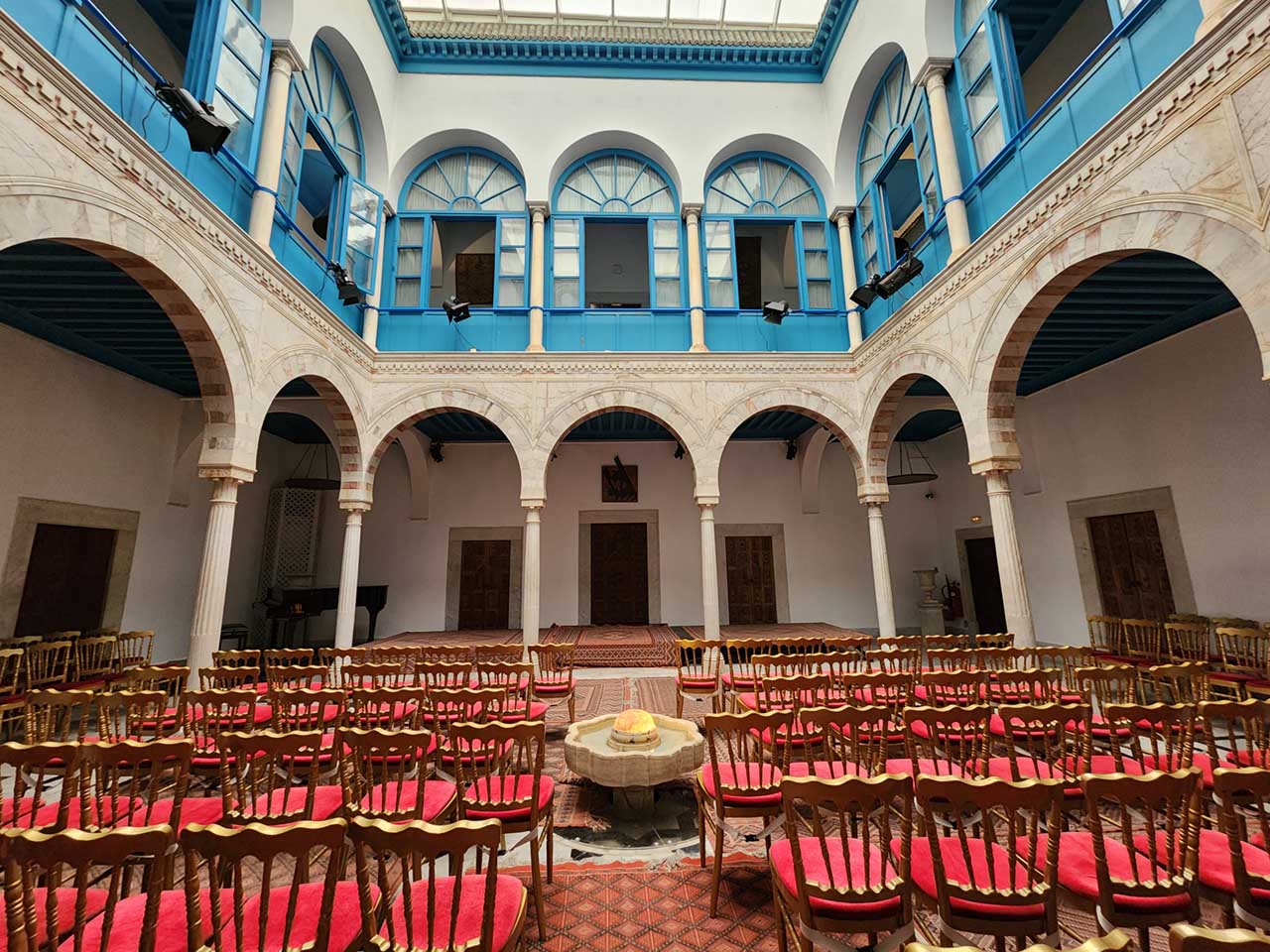
The music center also runs active sound archives that preserve Tunisian and Arab recordings, while research archives preserve the ritual, street, and other musical traditions not only of Tunisian and Arab heritages, but also of Andalusian, Jewish, and Tuareg cultures.
Ennejma Ezzahra opening hours and ticket prices
The palace and music center is open Tuesday to Sunday. It is closed on Mondays and public holidays.
| Period | Opening hours | Ticket office closes |
|---|---|---|
| September 1 to June 30 | 9:00 am to 1:00 pm 2:00 pm to 5:00 pm | 4:30 pm |
| July 1 to August 31 | 9:00 am to 3:30 pm | 3:00 pm |
| Ramadan | 9:00 am to 3:30 pm | 3:00 pm |
Adult admission: 10 TND
Student admission: 5 TND with student card
Free admission: Accompanied children under 12, handicapped visitors and companions, ICOM members, Ministry of Culture staff, and Tunisian nationals on the first Sunday of every month, and all visitors on International Museum Day on May 18.
Hours and admission fees are correct at the time of publishing, but it’s best to verify shortly before visiting.
Where is Ennejma Ezzahra in Sidi Bou Said?
The palace is perched on the edge of a rocky hillside below the main upper streets of Sidi Bou Said.
It is in a quiet location, away from the busiest cafés and shopping areas.
What to See in
Sidi Bou Said
A visit to the palace can easily be combined with a walking tour of Sidi Bou Said. Visit the marina, take in the village viewpoints, and enjoy a traditional mint tea with pine nuts or almonds and local pastries at the legendary Café des Nattes coffee house. Or visit the traditional 18th-century Dar El Annabi residence, a museum that offers visitors a look into the elite domestic life of Andalusian Tunisia.
The village of Sidi Bou Said is steep, so allow extra time for uphill walking.
Want to see more of Sidi Bou Said? Browse these popular tours and experiences in and around the village.
How long to spend at Ennejma Ezzahra
A visit to Ennejma Ezzahra typically takes 1 to 2 hours, enough time to walk through the rooms, see the musical instruments, and spend time in the gardens.
It fits easily into a half-day visit to Sidi Bou Said or can be included in a day tour of Carthage and Sidi Bou Said.
Planning to stay in Tunis or Sidi Bou Said? Search for hotels and guesthouses close to the village and Ennejma Ezzahra Palace.
Is Ennejma Ezzahra worth visiting?
The palace is widely considered well worth visiting for its stunning Arab-Andalusian architecture, peaceful cliffside gardens, and rare collection of traditional musical instruments.
While viewing Sidi Bou Said houses from the street offers a picturesque experience, visiting the palace provides a rare glimpse into historic interiors and is especially rewarding for those interested in Tunisian decorative arts or traditional music.
For those less interested in the museum collection, the panoramic views over the Gulf of Tunis and the Mediterranean gardens are well worth the visit.
Conclusion
Ennejma Ezzahra offers a blend of architecture, music history, and sea views that rises far above ordinary village walks.
Remember to check the Center for Arab and Mediterranean Music’s operating hours before you visit.


