
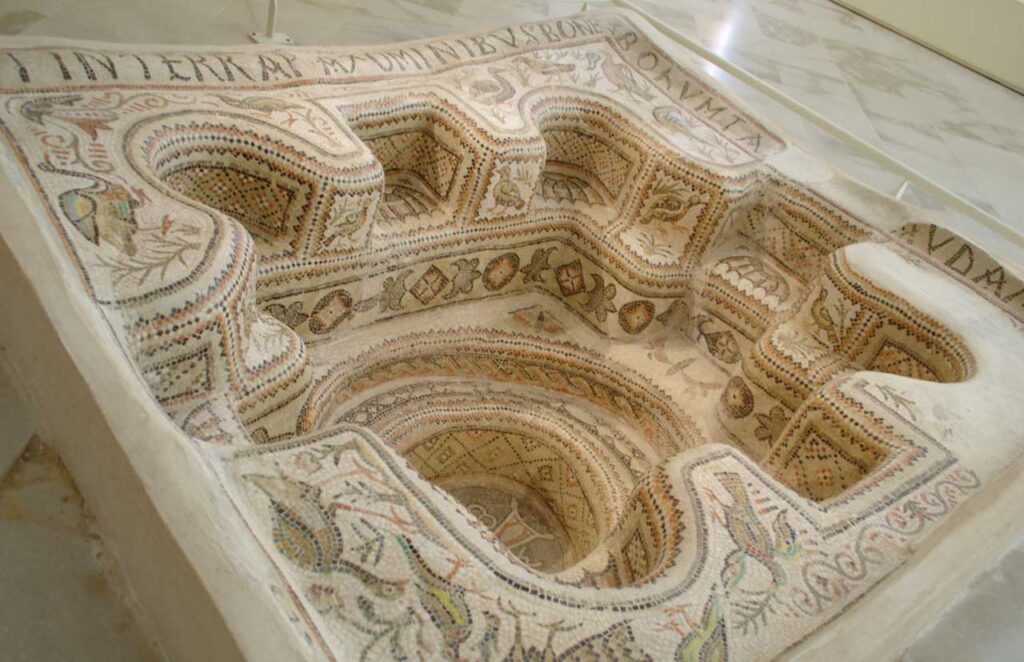
The Baptistery of Bekalta is one of Tunisia’s most remarkable early Christian treasures, often looking almost too intricate to be real in photographs.
This beautifully preserved mosaic baptismal basin, also known as the Baptistery of El Gaalla and generally dated to the 6th century, was discovered near the town of Bekalta.
Today, its exceptional craftsmanship and rare state of preservation can be admired at the Sousse Archaeological Museum, where it ranks among the country’s finest examples of early Christian art.
Last updated: July 2026
What is the Baptistery of Bekalta?
The Baptistery of Bekalta, also known as the Baptistery of El Gaalla, is a remarkably well-preserved 6th- or 7th-century Christian baptismal basin/font. It was discovered by chance near the town of Bekalta in the Monastir region of Tunisia in 1993.
In 1993, a quarry in Tunisia accidentally uncovered something that had been buried for 1,400 years.
The Baptistery of Bekalta is a 6th to 7th century Christian baptismal basin decorated with mosaic tesserae, noted for its extraordinary state of preservation.
The tesserae,… pic.twitter.com/8XY63tAVrU
— History Content (@HistContent) July 1, 2026
The structure was carefully removed and transferred to the Sousse Archaeological Museum, where it is a prized artifact.
Why the Bekalta Baptistery is rare
The Baptistery of Bekalta is rare for several reasons.
Baptismal basins decorated with mosaics are already considered rare, but the Bekalta font features a unique polylobed shape that is very uncommon in religious architecture of the Byzantine and Vandal eras.
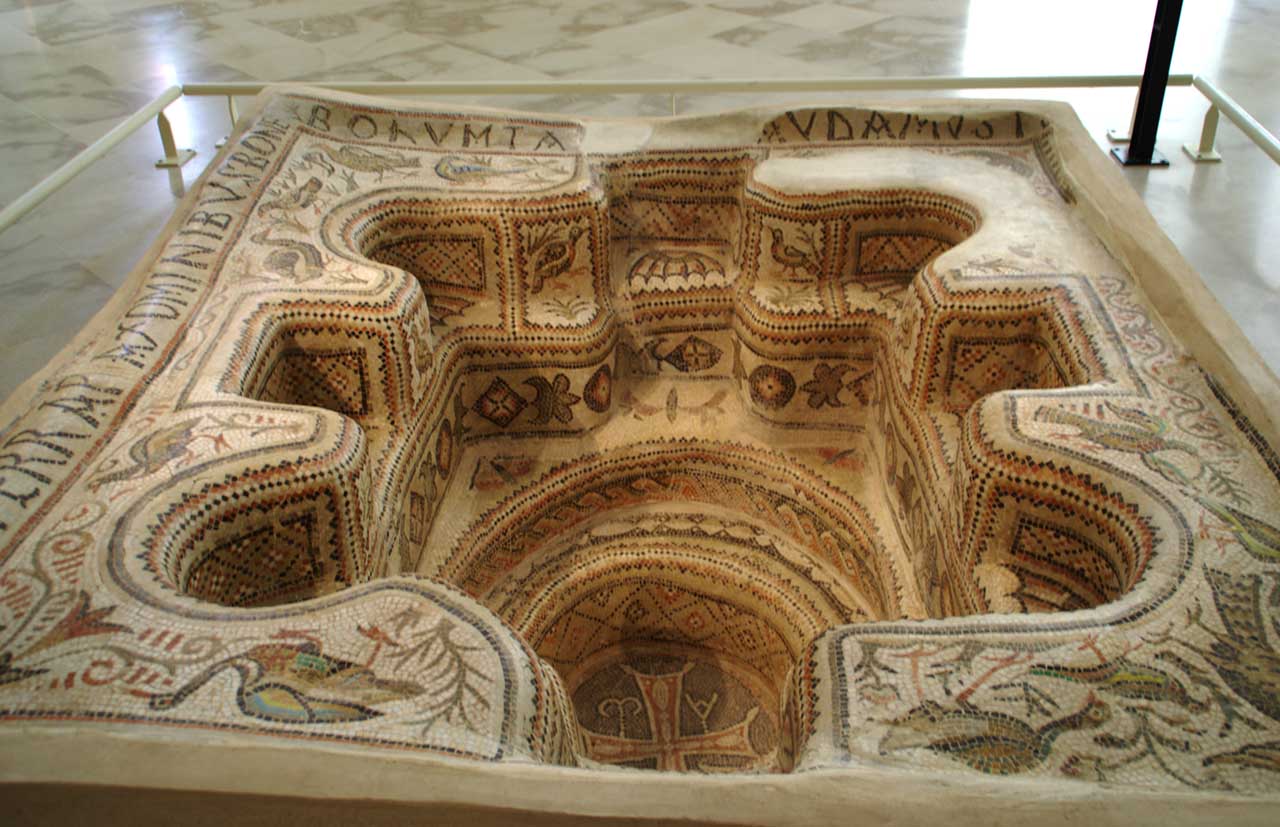
Also, the level of its preservation, considering its age, is quite remarkable. When found, it was covered in over 20 centimeters of soil that kept its intricate mosaic tesserae, colorful tiles of opaque glass and colored limestone, in flawless condition.
Another reason why the Baptistery of Bekalta is so rare is because mosaic-decorated basins/fonts are seldom uncovered among surviving archaeological remains.
The Discovery Near Bekalta and El Gaalla
Discovered in 1993, the Baptistery was accidentally uncovered during quarrying and land-leveling work near the town of Bekalta.
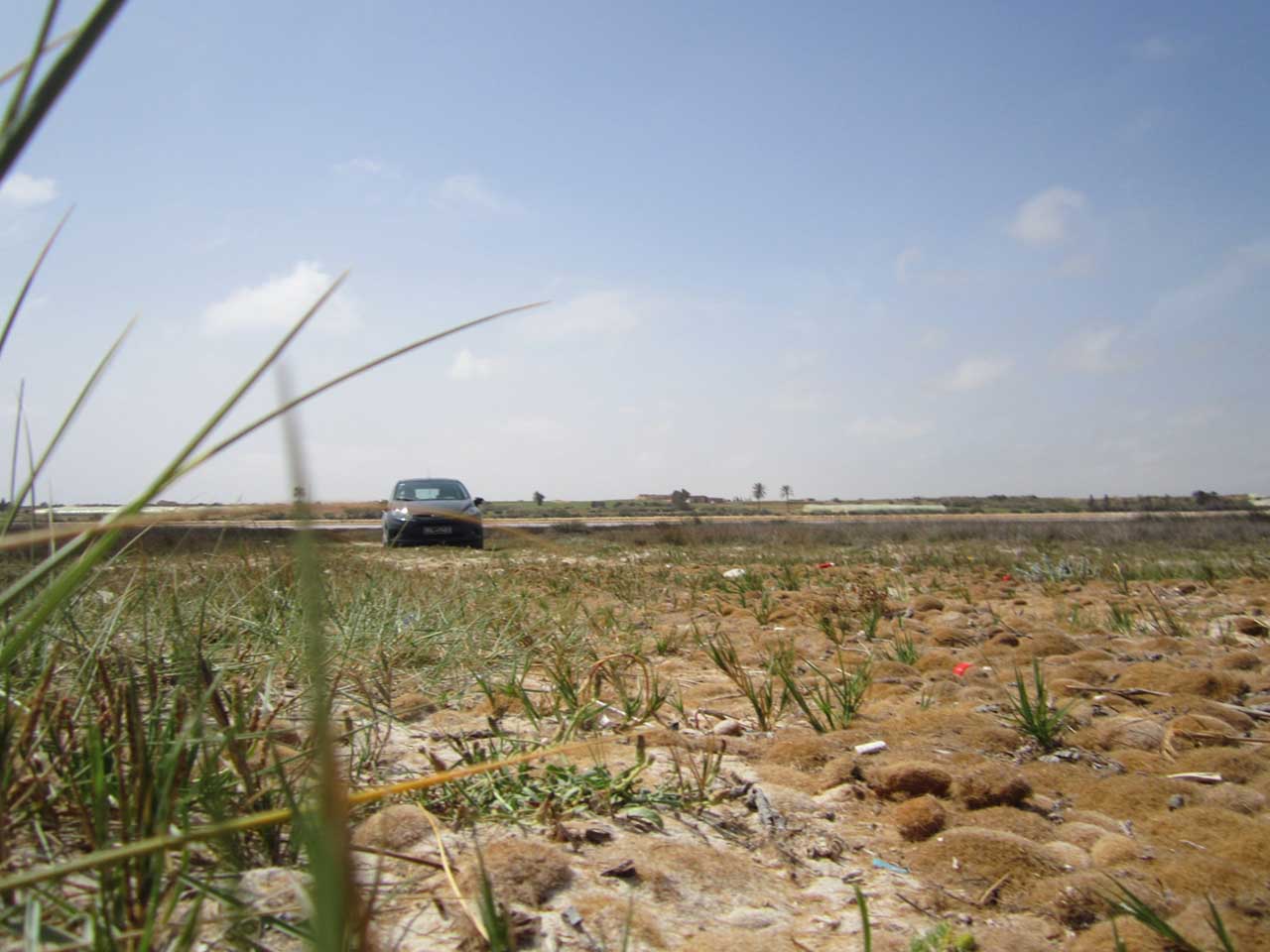
An archaeological rescue operation was launched when quarry workers struck the top of the ancient structure. What archaeologists uncovered was a remarkably intact Paleo-Christian artifact, perfectly preserved by its sandy grave.
Unfortunately, the other structures within the wider religious complex of Bekalta were severely damaged by heavy machinery. Unlike the baptistery, much of the site was damaged before an in-depth archaeological survey could be conducted.
What to look for in the mosaic design
The baptismal basin is notable not only for its age but also for the careful planning of its design.
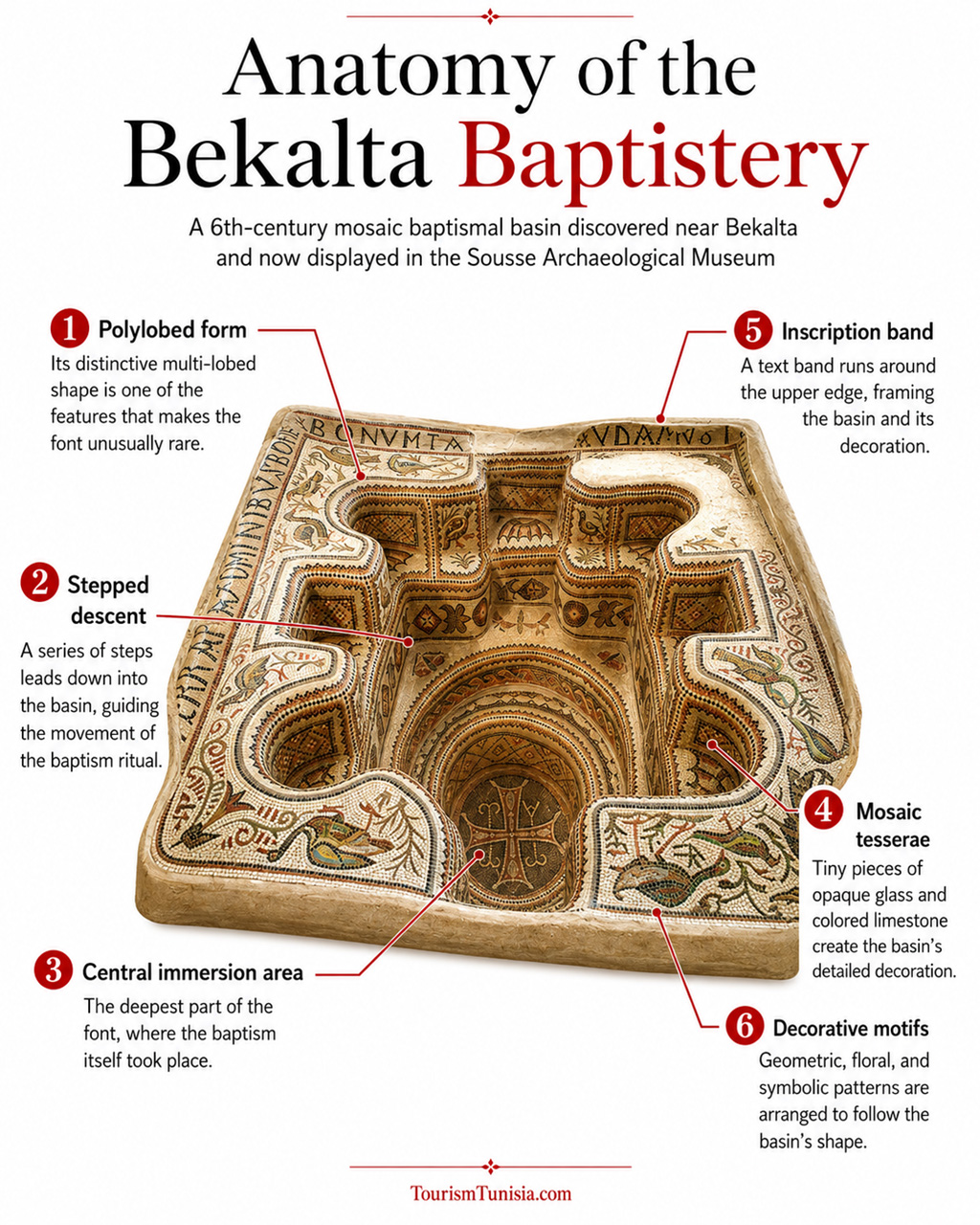
Its cross-shaped form is defined by a series of steps leading down into the basin, with every surface covered in intricate mosaic decoration.
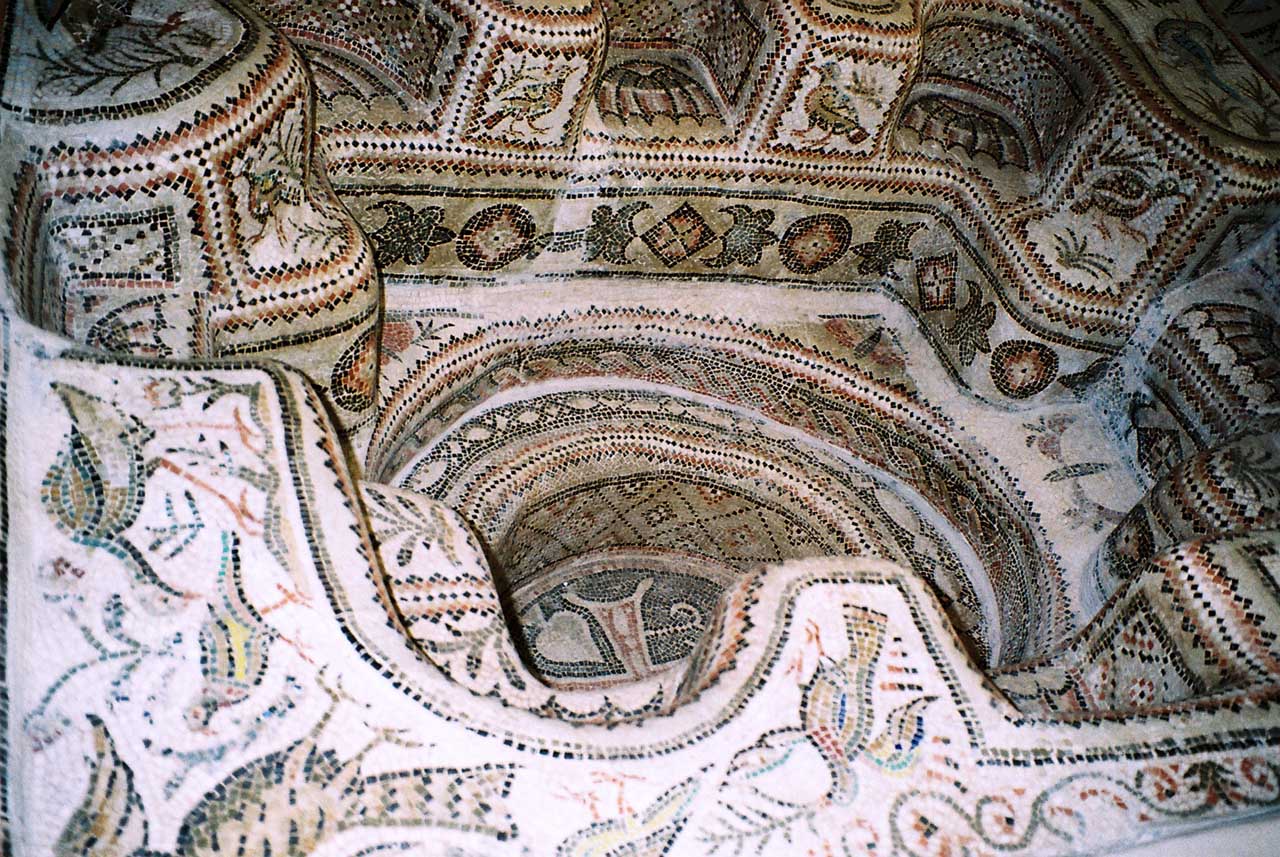
Rather than appearing random, the patterns follow the contours of the basin, emphasizing its shape and creating a balanced, harmonious appearance.
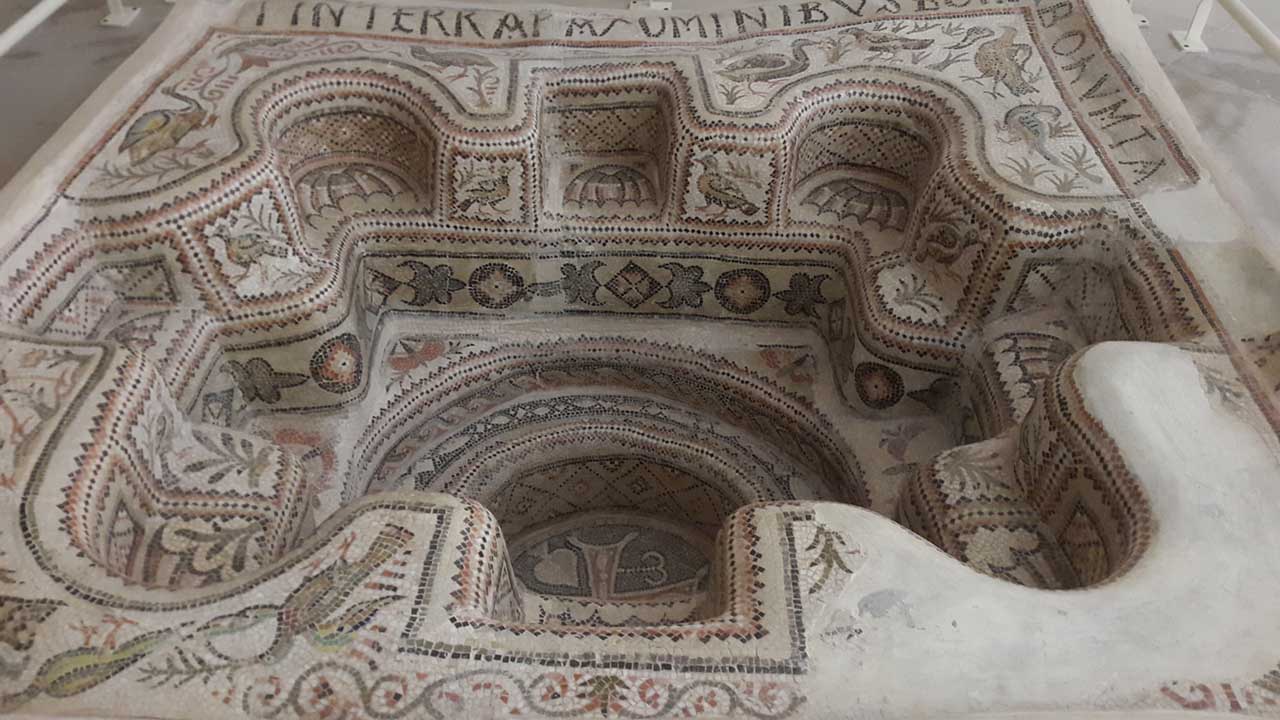
As you look more closely, notice the contrast between the light and dark mosaic tiles, which highlights the geometric designs and repeated decorative motifs.
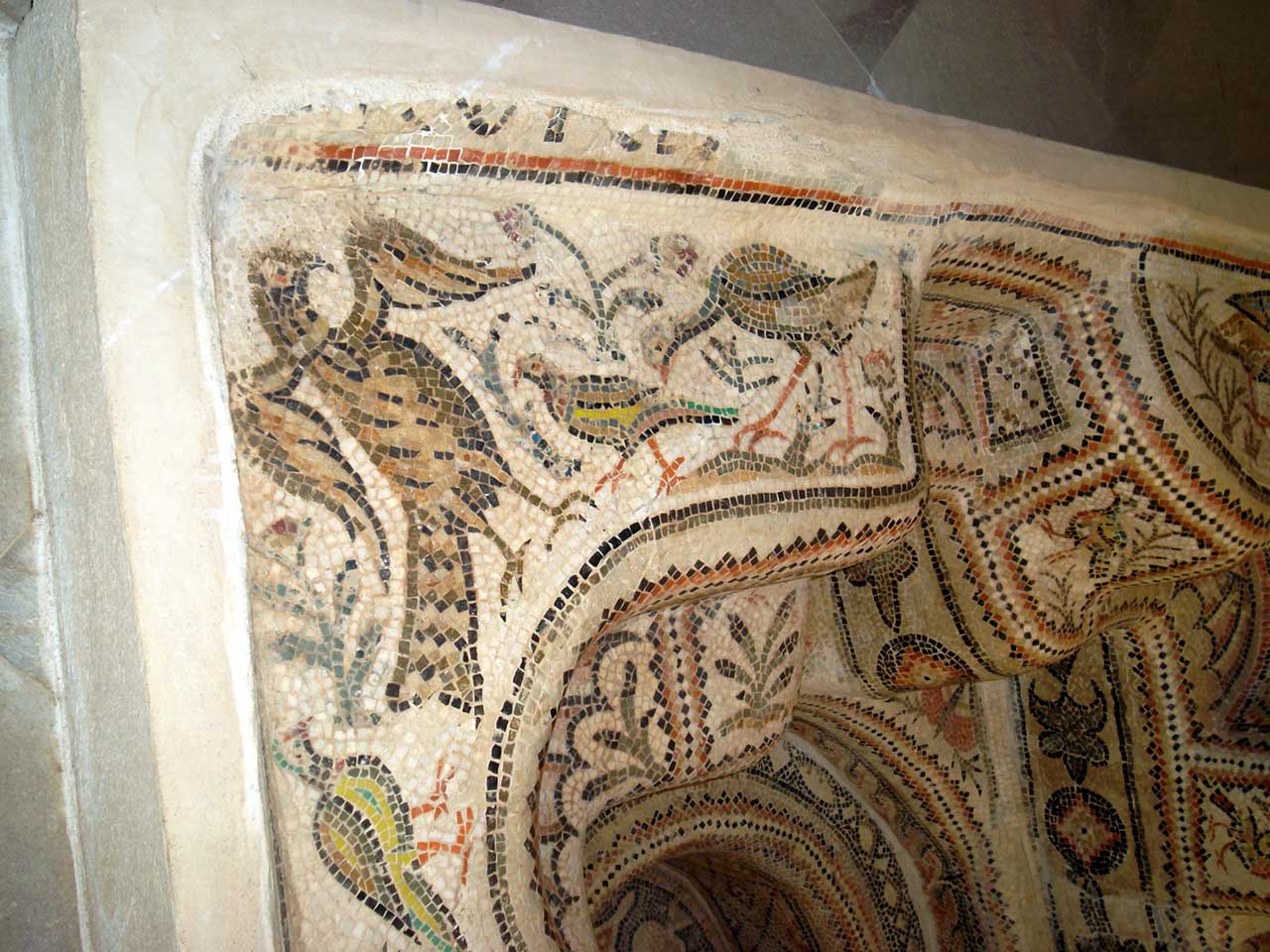
The carefully arranged patterns draw the eye from the rim down the steps and into the deeper central section of the basin, giving a clear sense of its depth while enhancing its visual impact. Even after centuries, the precision of the craftsmanship remains one of the baptistery’s most striking features.
Where to see the Baptistery of Bekalta today
The Sousse Archaeological Museum is a recognized cultural hub and tourist destination. It is home to the second largest collection of mosaics in Tunisia after the Bardo, including the Baptistery of Bekalta.
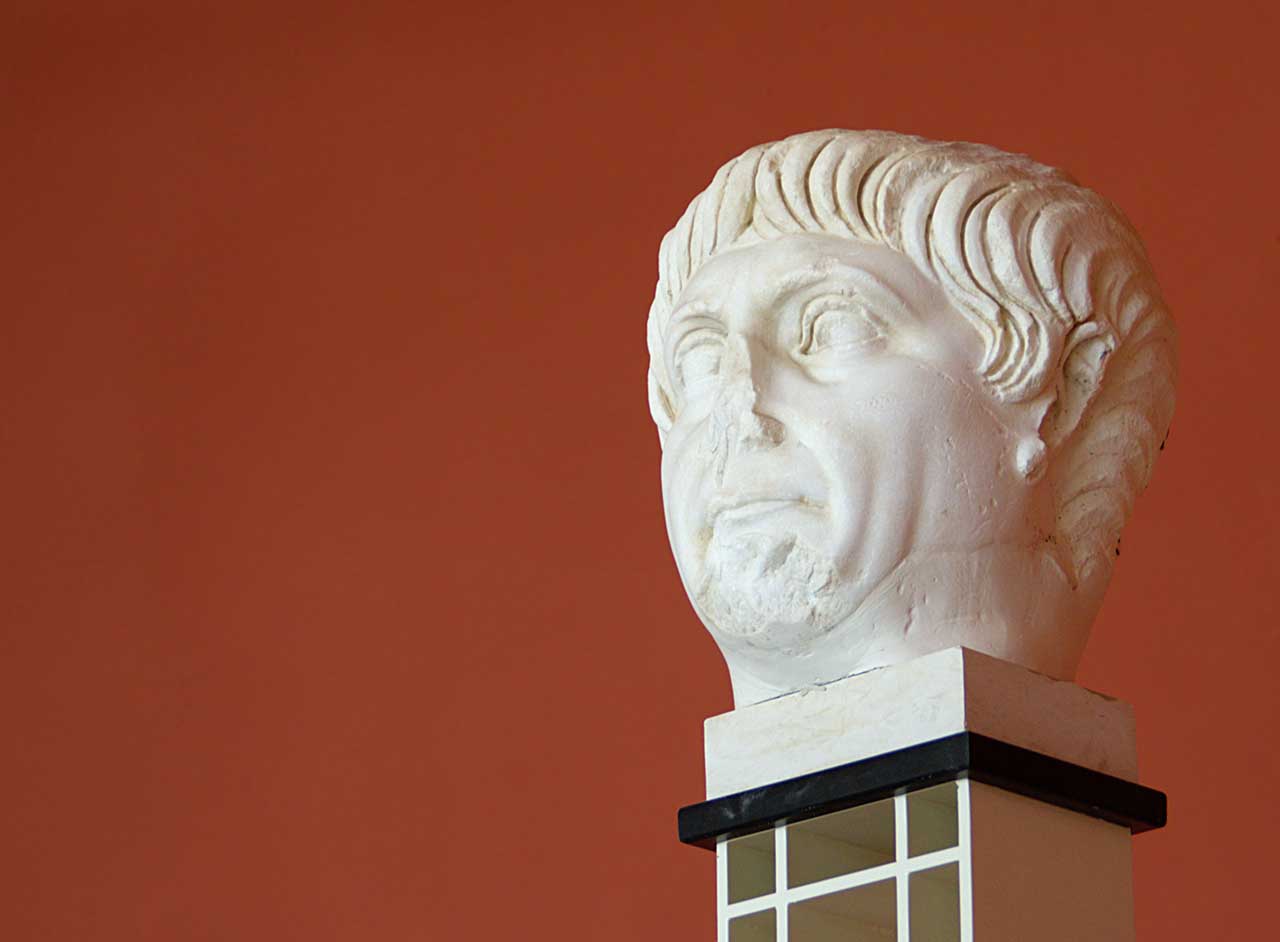
The museum is located within the ramparts of the historic Kasbah, making it a popular tourist drawcard within the Sousse Medina. The museum overlooks the medieval city, which has been classified as a World Heritage Site since late 1988.
Sousse Archaeological Museum practicals
| Visitor detail | Information |
|---|---|
| Opening days | Tuesday to Sunday |
| Summer hours | 9 a.m. to 6 p.m. |
| Winter hours | 9 a.m. to 5 p.m. |
| Ramadan | Closes at 4 p.m. |
| Admission | 10 TND non-residents / 5 TND residents |
| Facilities | Gift shop, cafeteria and toilets |
| Accessibility | Elevator available |
| Parking | Free public parking outside the Kasbah walls |
How to fit a museum stop into a Sousse visit
The Sousse Archaeological Museum is easy to include as part of a half-day visit to the city’s historic attractions. Because it is located within the Kasbah, it pairs naturally with time spent exploring the narrow streets of the Medina, a UNESCO World Heritage Site.
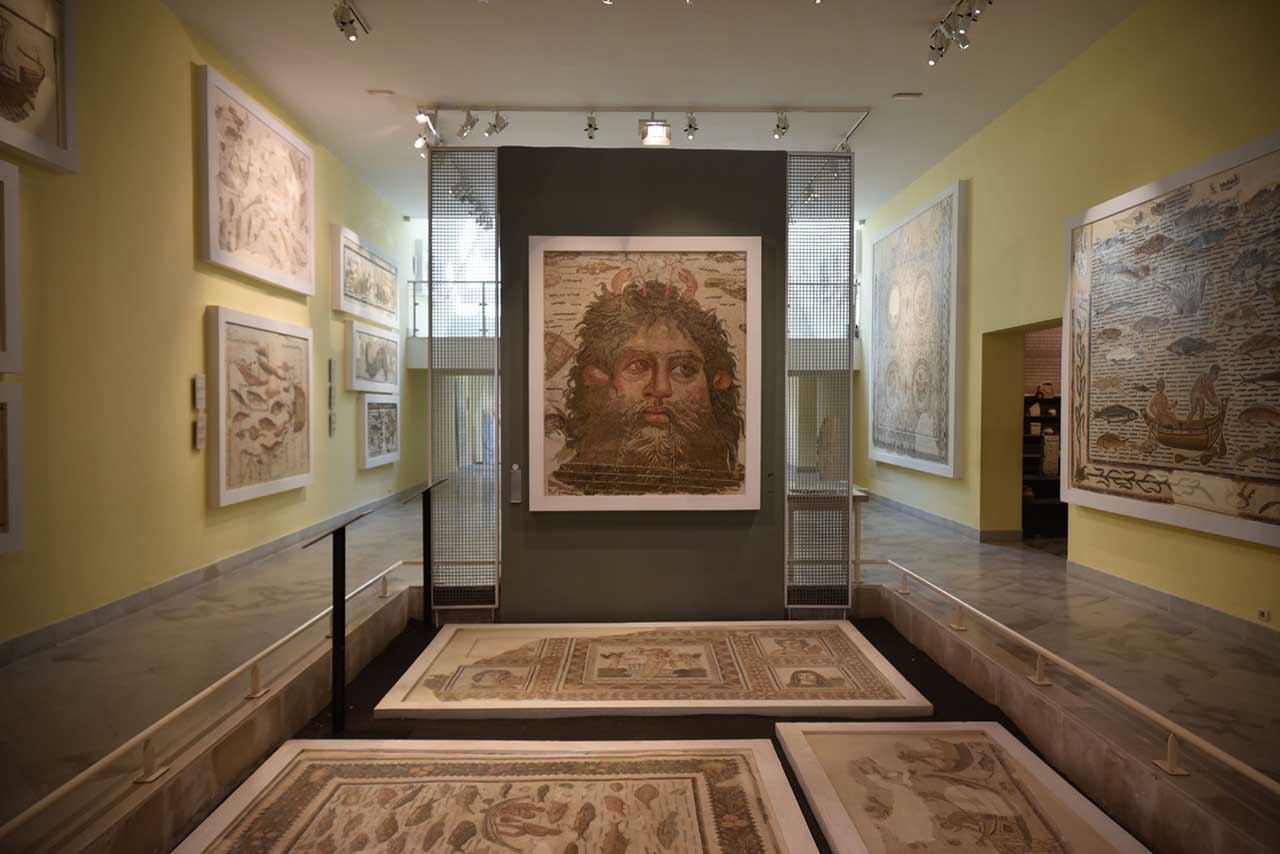
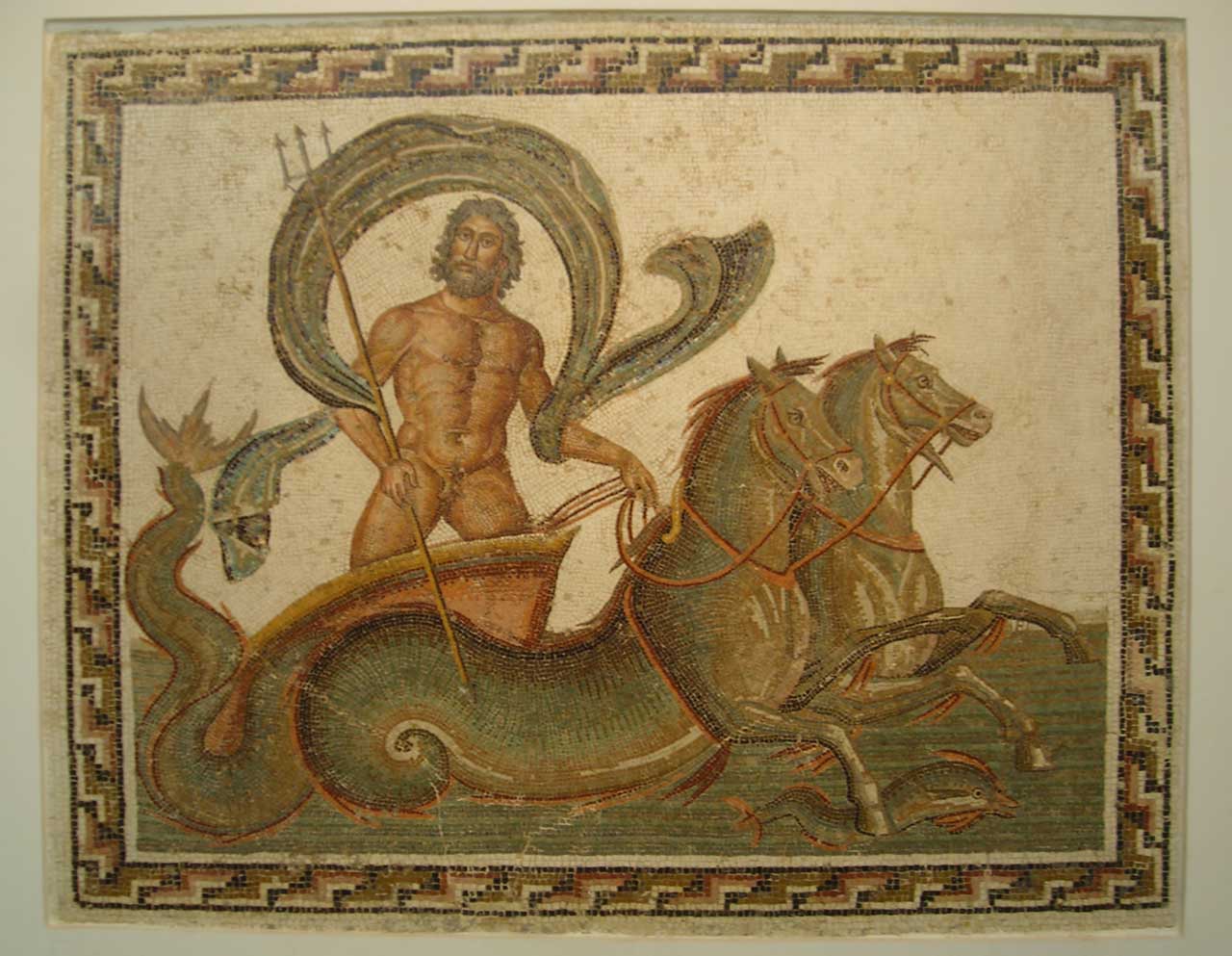
A simple sightseeing route is to begin in the Medina before walking up to the Kasbah to visit the museum. If time allows, continue to the nearby Great Mosque or the Ribat, one of the best-preserved Islamic fortresses in North Africa.
Looking for more to do in Sousse? Browse tours and activities available around the city.
For travelers staying in Monastir or Mahdia, the museum makes an excellent cultural stop during a day spent exploring Sousse. It can be visited comfortably without requiring a separate trip, leaving plenty of time to enjoy the city’s waterfront, markets, and other historic landmarks.
Planning to stay in Sousse? Search for hotels near the Medina, beach and city center.
Why the baptistery matters for Tunisia’s Christian heritage
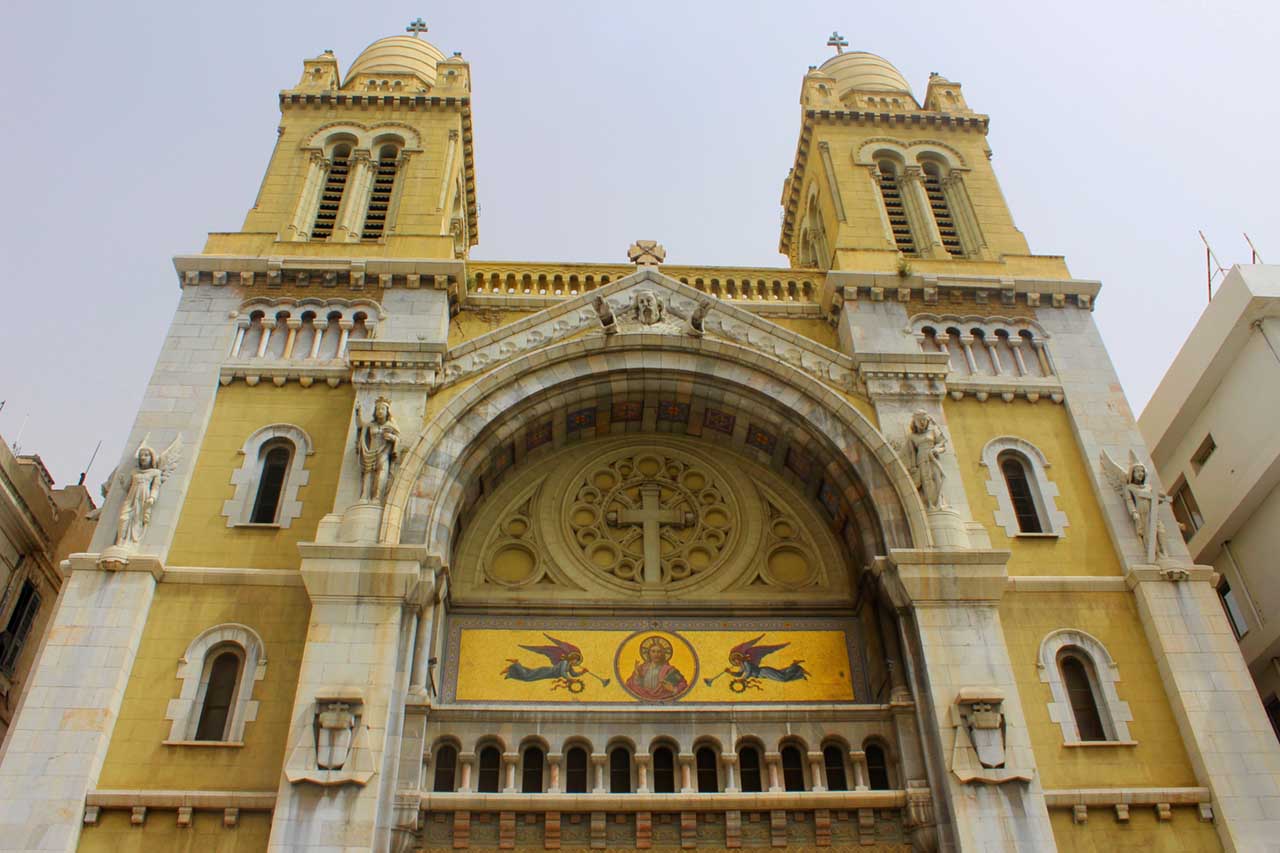
Although Tunisia is best known for its Punic, Roman, and Islamic heritage, it also preserves an important legacy from the early Christian period.
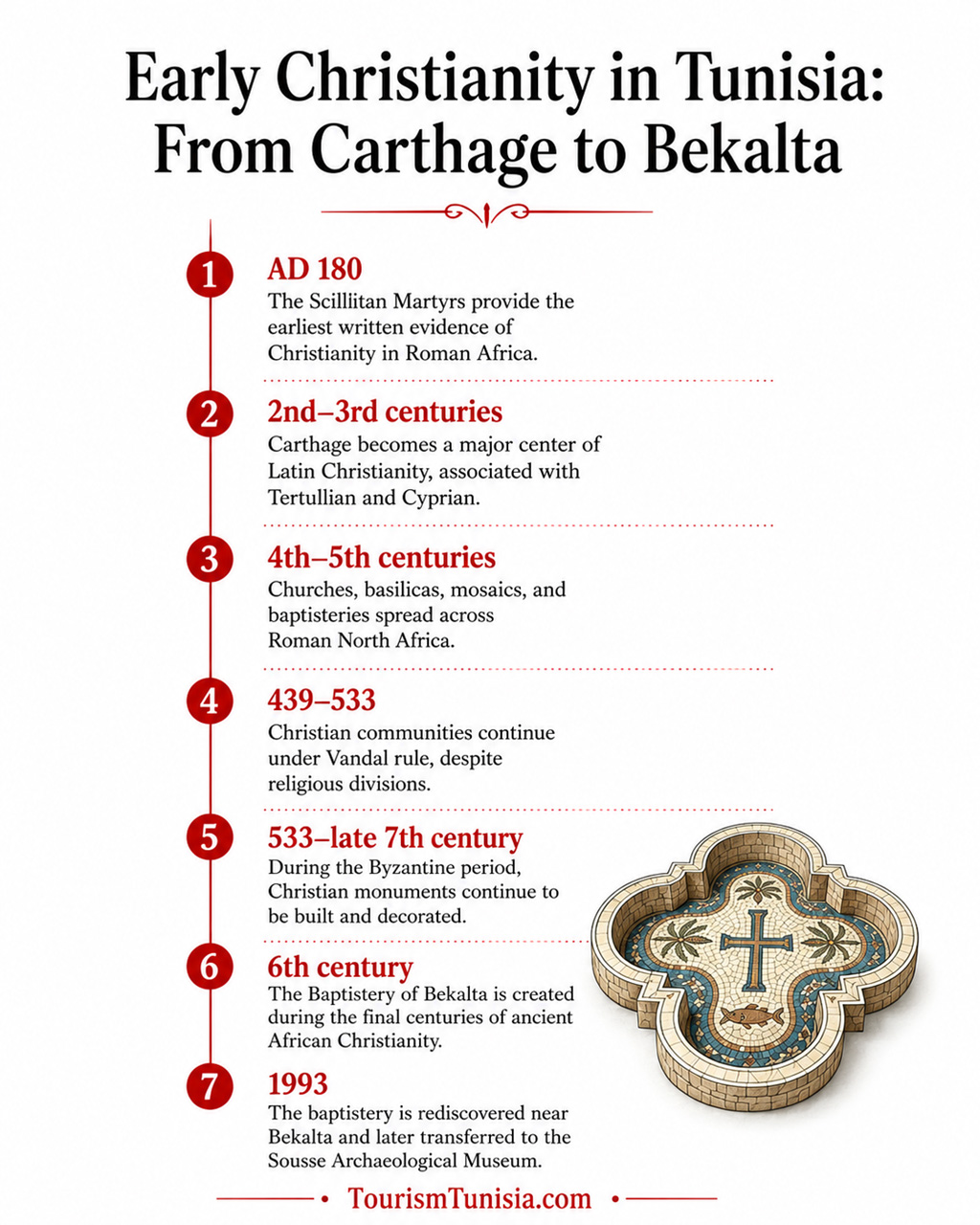
Between the 4th and 7th centuries, the region was home to thriving Christian communities that left behind churches, baptisteries, mosaics, and other archaeological remains found across the country.
The Baptistery of Bekalta forms part of this wider Christian heritage. Its remarkably well-preserved baptismal basin offers valuable insight into the religious practices and artistic traditions of Late Antiquity.
Another notable example is the Baptistery of Kelibia, one of Tunisia’s best-known early Christian monuments, whose decorated baptismal font is now displayed in the Bardo National Museum.
Conclusion
The Baptistery of Bekalta, discovered near Bekalta and El Gaalla, is one of Tunisia’s most remarkable early Christian archaeological finds.
Its intricate mosaic decoration, distinctive cross-shaped design, and exceptional state of preservation make it a rare survivor from Late Antiquity.
Today, the baptistery is displayed in the Sousse Archaeological Museum, where it can be appreciated alongside one of the country’s finest collections of Roman mosaics and ancient artifacts.
Whether you have an interest in early Christian history or are simply exploring the rich heritage of Sousse, a visit to the museum is rewarding and fits naturally into a day of sightseeing in the city’s historic quarter.


