
Tunisian Media
It would be fair to say that the Tunisian media differs greatly from what most Western countries are used to.
 There have been long periods of censorship and while the total amount of newspapers has grown significantly over the last two decades, the country is still behind due to some of the legislation which has been enforced over the years.
For example, it was only in 2005 that the Code de la presse de 1975 was altered. Previously, this prevented newspapers from defaming the authorities in any shape or form, meaning that coverage was hugely restrictive.
Nevertheless, even though the press now have more freedom, very few publications offer a critical viewpoint. In fact, external studies have shown that the media attempt to show a plainer overview of the country than what really occurs.
Taking the above history into account, it won’t come as a surprise to hear that print media, television and radio are all much different in Tunisia than any other countries. We’ll now take a look at each segment to see what media the locals are accustomed to.
Print Media
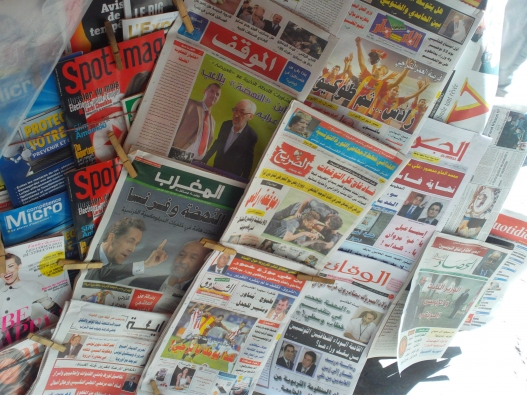 As we have already highlighted, newspapers were under particularly strict censorship guidelines. Even though these have been legally relaxed, many still abide by them.
Newspapers tend to be split into two languages and are published in either French or Arabic. There is only L’Expert, published every day, which offers two separate editions. From an online perspective, the two main websites in the form of Tunisia Daily and Tunisialive are both published in English, although there is a French version available for the former as well.
Some might be interested to see that print media which specifically concentrates on politics is all published in Arabic.
Most of these editions are released on a weekly basis. However, if you turn to economic-specific publications, French is the dominant language.
Television
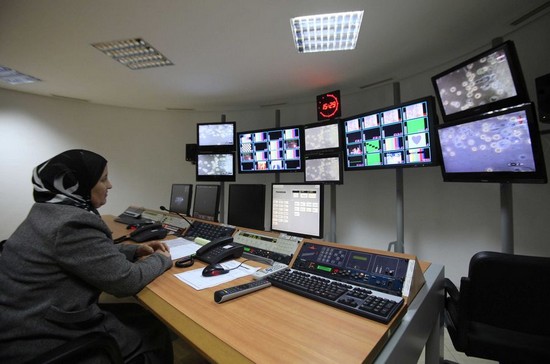 The fact that television in the country reaches almost every household shows just how powerful this medium really is. Just like most other countries, Tunisia relies heavily on free satellite channels, with just 15% of households tuning into a terrestrial platform.
It could be said that there is much less legislation focussing on television coverage. For example, out of the four free-to-air channels in the country, just one is operated by the state.
Radio
 Just like the rest of the media in Tunisia, there is a real mix of languages when it comes to the radio stations. While a lot of the stations are covered in Arabic, a small proportion still caters to French speakers.
Again, like the rest of the media, radio in the country has adapted to legislative changes. Over a decade ago, in 2003, it was announced that the radio industry would begin to accept private companies.
This meant that there would finally be competition for the four national radio stations that had donned the wavelengths for so many years. These are managed by Établissement de la radio tunisienne and are complimented by the organisation’s regional stations, including Sfax, Gafsa and Le Kef.
Unsurprisingly, the decision to privatise radio has sparked a transformation of this form of media. Now, the following stations are regarded as some of the most prominent in the country:
Mosaïque FM
Being the first private radio station that was to don the Tunisian airwaves, it’s no surprise to see that Mosaique FM is hugely popular. While it broadcasts to the North of the country, the fact that it is also available online means that it actually attracts a lot more listeners than you might fist imagine.
On the subject on the listenership, a recent study found that most people who tuned into the station were aged between 20 and 39.
The story behind Mosaique FM
One of the reasons why Mosaique FM is so popular is because it was the first private radio station in Tunisia. Another, is because it held associations with the Trabelsi clan.
In fact, at one point Belhassen Trabelsi owned 13% of shares of this station. Considering the fact that he is the brother of the first lady, this was quite a significant piece of information that was associated with the station.
However, following the 2011 revolution, it is widely understood that Trabelsi’s shares have been transferred away from him. Initially, he was regarded as a hugely successful businessman – someone who sat on the Board of Banque de Tunisie and owned 65% of KoralBlue airlines amongst other prominent business interests.
However, during 2011 particular emphasis was featured on the Trabelsi clan, of which he happened to be regarded as the ‘Godfather’ of. It was suggested that he was involved in huge amounts of corruption and the fact that he fled the country during the revolution suggests that large elements of these suspicions are very accurate. It is understood that he is still trying to avoid the authorities somewhere in Canada, where he is the subject of a search from Interpol.
He has already been sentenced to over five years in prison and with the Tunisian government allegedly considering freezing his assets, many are now under the firm impression that his involvement with Mosaique FM is completely over.
The content of Mosaique FM
This is a radio station was once classed as the “radio of the Trablesi Clan”, for obvious reasons.
Now, following Trabelsi’s history, it tends to focus on primetime shows. These cover a lot of social issues and at the last count, there were 29 different programs that were broadcast over the station. Considering the availability of Mosaique FM, and the fact that it is broadcast in Arabic, Tunisian Arabic and French, these are further reasons why the station has become so popular since its inception over a decade ago.
In other words, it’s not just gained attention because of its links to Trablesi – it happens to boast solid content which has gained acclaim from numerous sources across the country.
Shems FM
Shems FM was another one of the first private radio stations to hit the Tunisian airwaves. It went live in September 2010, making it the fourth one to do so since the relaxation of legislation in relation to private ownership in 2003.
Unlike some rival stations, Shems FM is only broadcast in Arabic. It only broadcasts to Nabeul, Greater Tunis, Sousse, Monastir, Gafsa, Kairouan and Bizerte, although it does have an online stream meaning that the majority of the country have access to it.
The story behind Shems FM
Like several other radio stations in the country, the story behind Shems FM isn’t simple, and is at times political.
One of the reasons why a lot of attention was placed on this station in the early days was because of its ownership.
It is owned by Cyrine Ben Ali Mabrouk – who happens to be the daughter of the former president of Tunisia, as well as the wife of a major businessman called Marouen Mabrouk.
However, it was her links to Zine El Abidine Ben Ali which make this story. During the 2011 revolution, a lot of attention was placed on the president as the country decided to turn against his regime due to corruption and other reasons.
It resulted in him being ousted from the presidency and being forced to flee the country. Having first being rejected from entering France, he turned to Saudi Arabia who permitted him to live there in exile under the provision that he keeps out of politics.
Unfortunately, his daughter’s fate wasn’t as “comfortable”. A lot of the family attempted to flee and while the military at the time may have permitted Zine El Abidine Ben Ali to do so, this was not granted to other members.
This resulted in most of them, including his daughter, being arrested. As such, she no longer has any influence on Shems FM – but this hasn’t had a significant effect on the content of the station as we’ll soon find out.
The content of Shems FM
With over thirty different hosts, it goes without saying that the content on Shems FM certainly covers a lot of genres.
There are a total of 23 different programs that are currently broadcast across the station, with these varying between general, music, sport and games shows. Additionally, the station broadcasts a news bulletin every hour.
Express FM
First coming to the airwaves in 2010, Express FM was another one of the first privately launched radio stations in Tunisia. However, unlike the other ones that were launched during this period, Express FM caters for a more specific audience. Its shows target the economic situation in Tunisia, with the station most prevalent in Greater Tunis and Sfax. It’s actually the latter where Express FM is based.
Like most of the new radio stations in Tunisia, Express FM is available to listen to online. Additionally, regular podcasts are released on the shows, to make the catch-up experience all the more easier. Unlike some of the other stations that were released at a similar time, Express FM is broadcast entirely in Arabic.
Why has Express FM proved to be so popular?
The timing of the launch of Express FM probably couldn’t have come at a better time for Tunisians. It occurred just months before the 2011 Revolution, which has prompted several changes in the country’s economy.
Up until this point, it was dictated heavily by the state. While this has prompted a steady incline over the last year, the new landscape means that the market might not be quite as predictable as it once was.
Additionally, there has been further interest in this topic due to the loan guarantees that the country has obtained from other nations. One example of such finance occurred in 2012, with the US backing a loan guarantee to make it easier for Tunisia to access market funding at more affordable rates. Naturally, such instances have caused questions, with Express FM regularly discussing these topics as a result.
Content of Express FM
As we’ve already highlighted, the main aim of Express FM is to provide shows which are based around Tunisia’s economy. These include the likes of Eco Dico, Double Espesso and Tuning – amongst several others.
However, this is also regarded as a cultural station. It regularly seeks the opinions of respected journalists and artists and is one of the first stations that is thought of by expert speakers.
Additionally, it’s not all related to economics. For example, there are no fewer than three sports shows, while two spots are dedicated to pure humour. There are also entertainment, consumer and business shows, suggesting that Express FM is much more than the economic radio station that so many people view it as.